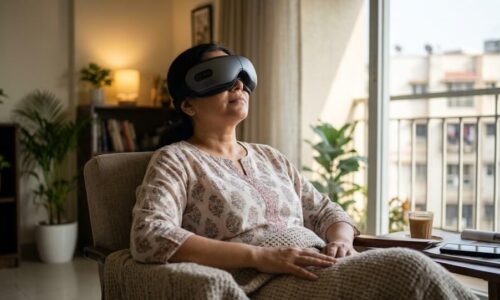
Choosing between an electric scalp massager and a wooden scalp comb depends on your comfort, hair type, and daily hair care routine. Both offer a simple way to massage your scalp, but neither guarantees hair regrowth.

What Is an Electric Scalp Massager?
An electric scalp massager uses a small motor to move soft massage heads across your scalp. Depending on the model, it may offer rotating or vibrating movements and different speed settings.
It’s a convenient option if you enjoy regular scalp massages without moving a manual comb yourself. Look for soft contact points, a comfortable grip, and easy-to-clean parts. Remember that powered movement does not mean better hair growth. Its main benefit is convenience and relaxation.
What Is a Wooden Scalp Massager?
A wooden scalp massager is a manual grooming tool with rounded teeth or massage points. You control the pressure and movement using your hand, making it easy to adjust the massage to your comfort.
Many people prefer wooden combs because they are simple, lightweight, and don’t require charging. However, the finish matters. Choose a smooth, polished design without sharp edges or splinters to reduce the risk of scratching your scalp or pulling your hair.
Electric vs Wooden Scalp Massager: Key Differences
| Feature | Electric massager | Wooden massager |
|---|---|---|
| Operation | Battery-powered | Manual |
| Massage movement | Rotating or vibrating | Hand-controlled |
| Convenience | Requires little hand movement | Requires manual effort |
| Pressure control | Depends on device settings | Direct hand control |
| Maintenance | Clean heads and charge battery | Clean and keep dry |
| Price | Usually higher | Usually more affordable |
| Best for | Convenience and powered massage | Simple, controlled massage |
Which Scalp Massager Is Better for Hair Growth?
Neither electric nor wooden scalp massagers have strong clinical evidence proving that they can reverse hair loss or guarantee new hair growth.
A small 2016 study published in Eplasty examined nine healthy men who received four minutes of scalp massage daily for 24 weeks. Researchers observed an increase in hair shaft thickness, but did not find a significant increase in hair growth speed.
This research is interesting, but its small sample does not establish scalp massage as a hair loss treatment. Choose your massager based on comfort rather than advertising claims.
Which Scalp Massager Is Better for Hair Loss?
Hair loss can have several causes, including genetics, hormonal changes, nutritional problems, and scalp conditions. A massage tool cannot treat all these underlying problems.
If you notice excessive shedding, thinning, or bald patches, consult a dermatologist to understand the cause. The American Academy of Dermatology explains that treatment depends on the type of hair loss.
If you want to explore more scalp care options, read our guide to the best scalp massagers for hair growth and relaxation to compare different designs, features, and uses.
How to Use a Scalp Massager Safely
A scalp massage should feel comfortable, not painful. Follow these simple precautions:
- Start with gentle pressure and short sessions.
- Avoid pulling or dragging the tool through tangled hair.
- Choose rounded, smooth massage points.
- Clean the tool after use.
- Follow the manufacturer’s instructions for electric devices.
- Avoid massaging cuts, infections, or irritated skin.
- Stop if you experience pain, redness, or discomfort.
What Are the Disadvantages of Scalp Massagers?
Using too much pressure can irritate your scalp, scratch the skin, or pull out hair. Poor-quality wooden combs may have rough edges, while electric models require charging and regular cleaning.
Another concern is exaggerated marketing. Claims that a scalp massager can stop hair loss or guarantee thicker hair are not supported by strong clinical evidence. Treat these products as personal care accessories, not medical treatments.
How to Choose the Right Scalp Massager
Before buying, consider your hair type, scalp sensitivity, and how you plan to use the tool.
- For convenience: Consider an electric model with soft massage heads.
- For manual control: Choose a wooden comb with smooth, rounded teeth.
- For sensitive scalps: Avoid hard tips and aggressive massage settings.
- For easy maintenance: Check cleaning instructions and material quality.
- For long or curly hair: Choose a design that does not catch or pull strands.
Always check product specifications, warranty details, and customer feedback before purchasing.
Conclusion
An electric scalp massager is a convenient choice if you prefer powered movement, while a wooden scalp comb is suitable for simple, manual massage. Both can make your hair care routine more relaxing when used gently.
However, neither has been proven to guarantee hair growth or treat hair loss. Choose a comfortable, well-made tool, maintain good scalp hygiene, and consult a dermatologist if you experience ongoing hair thinning or excessive shedding.
Frequently Asked Questions
Which type of scalp massager is best for hair growth?
Neither type has been proven to produce reliable hair regrowth. Choose the one that feels comfortable and allows gentle massage without pulling your hair.
Are wooden scalp massagers good for hair growth?
Wooden scalp massagers can provide a relaxing manual massage, but there is insufficient clinical evidence that they directly stimulate new hair growth.
Do electric scalp massagers help hair growth?
Electric models make scalp massage convenient, but there is no strong clinical evidence that they can reverse hair loss or guarantee faster hair growth.
Which scalp massager is best for hair loss?
No scalp massager is an established hair loss treatment. Consult a dermatologist to identify the cause of thinning and discuss suitable treatments.
What are the disadvantages of a scalp massager?
Excessive pressure can cause irritation, scratches, and hair pulling. Electric models also require charging and cleaning, while wooden tools need proper care to prevent surface damage.
Do dermatologists recommend scalp massagers?
Gentle scalp massage may be acceptable as part of personal care, but dermatologists do not consider scalp massagers a proven treatment for common forms of hair loss.
Editorial review: This article was reviewed for factual accuracy, product information, and hair care guidance. Research references and medical recommendations were checked against published studies and dermatology resources. Product-specific claims should be verified against the manufacturer’s current instructions.