
Best Air Purifier In India 2026
Choosing the best air purifiers for your home is not only about buying the machine with the highest number on the box. The right choice depends on your room size, Clean Air Delivery Rate (CADR), filter system, noise level, maintenance cost, and the type of indoor pollutants you want to reduce.


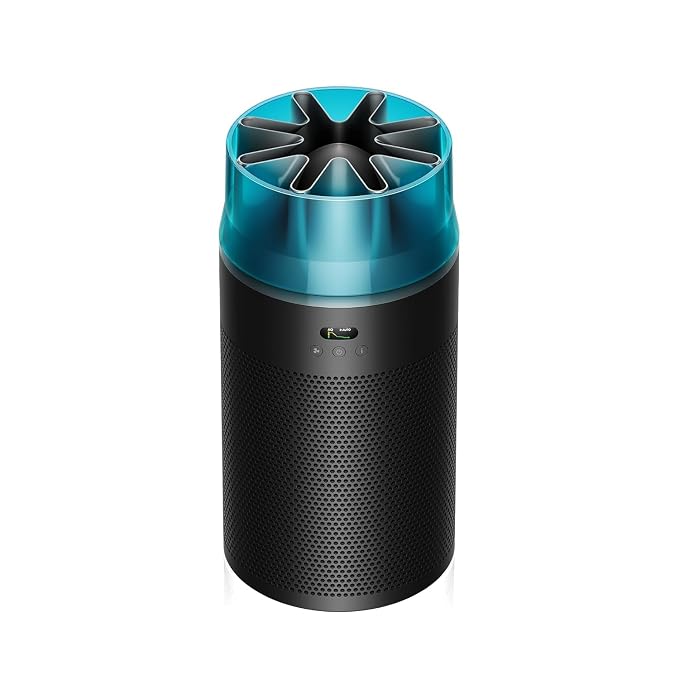


*Affiliate disclosure: Some links on this page are affiliate links. If you purchase through one of these links, Artik Mart may earn a commission at no extra cost to you.
Quick Picks: Best Air Purifiers in India
| Category | Our Pick | Best For |
|---|---|---|
| Best Overall | Coway Airmega 150 | Everyday home use |
| Best Smart Option | Xiaomi Smart Air Purifier 4 Lite | App control and compact homes |
| Best for Larger Rooms | Philips 2000 Series | Higher airflow requirements |
| Best Premium Option | Dyson Purifier Cool Gen1 | Premium design and fan functionality |
| Best for Bedrooms | Honeywell Air Touch V5 | Quiet bedroom use |
These recommendations are based on the features and specifications available for each product. They are not medical recommendations.
Air Purifiers Price India 2026
Best Air Purifier under 10000
- Nutripro NPAIR01 (300 sq ft): Approx ₹2,999
- Karcher AF20: Approx ₹2,990 – ₹9,499
- Levoit Core Mini: Approx ₹4,999
- Honeywell Air Touch V1: Approx ₹4,990
- Kent Aura: Approx ₹6,349
Best Air Purifier Mid-Range (₹10,000 – ₹25,000)
- Coway AirMega 150: Approx ₹13,499 – ₹13,900
- Qubo Smart Q600: Approx ₹16,991
- Honeywell Air Touch P1: Approx ₹17,499
- Blueair Blue Pure 211: Approx ₹21,091
Best Air Purifier Premium (Above ₹25,000)
- Sharp Plasmacluster FP-J60M-W: Approx ₹25,400
- Philips AC3059/65: Approx ₹27,720
- Sharp FX-J80M-H: Approx ₹31,490
- Coway AirMega 250: Approx ₹34,999
- Dyson Hot+Cool HP2: Approx ₹56,899
Best air purifiers for Indian homes with allergies and sensitive breathing needs
Air Purifier for Homes with allergies need strong filters that trap dust, pollen, and tiny particles. These purifiers make the air calmer and easier to breathe. They help reduce sneezing, coughing, and morning heaviness so your family feels lighter through the day.
Best Air Purifiers in India: Our Top Picks
1. Coway Airmega 150
Best for: Everyday home use and bedrooms
The Coway Airmega 150 is a compact air purifier designed for home use. Its appeal comes from its simple design, filtration system and relatively straightforward maintenance.
Key points to check:
- Published CADR and recommended room size
- Pre-filter and particle filtration system
- Activated carbon filtration
- Filter replacement requirements
- Noise levels in different operating modes
- Availability and price of replacement filters
Why consider it: A good option for buyers who prefer a simple purifier without depending heavily on smart features.
Potential drawback: It may not be the best choice if you specifically want advanced app controls or smart-home integration.
2. Philips Air Purifier 2000 Series
Best for: Buyers looking for a higher-capacity household purifier
Philips offers air purifiers with particle filtration, air-quality sensing and automatic operating modes on selected models. The exact features depend on the model, so check the individual product specification before buying.
Why consider it:
- Strong airflow on selected models
- Air-quality monitoring on supported models
- Automatic modes
- Established replacement filter ecosystem
Potential drawback: Replacement filter prices and availability can vary by model.
3. Xiaomi Smart Air Purifier 4 Lite
Best for: Buyers who want smart controls
The Xiaomi Smart Air Purifier 4 Lite is aimed at users who want a compact purifier with connected features. Depending on the market version, the device can provide app-based controls and air-quality information.
Why consider it:
- Smart control features
- Compact design
- Air-quality display
- Suitable for buyers who prefer app-based controls
Potential drawback: Smart features are not essential for everyone. If you only need basic filtration, a simpler model may offer better value.
4. Dyson Purifier Cool Gen1
Best for: Premium design and purifier plus fan functionality
Dyson’s purifier and fan products are designed for users who want air purification combined with a premium appliance design. The exact filtration and sensor specifications vary by model.
Why consider it:
- Premium design
- Fan functionality
- Air-quality monitoring on supported models
- Suitable for buyers who value both appliance design and functionality
Potential drawback: The initial purchase price and replacement filter cost can be higher than many conventional air purifiers.
5. Honeywell Air Touch Series
Best for: Bedrooms and everyday home use
Honeywell offers several air purifier models with multi-stage filtration. Depending on the model, this may include a pre-filter, particle filtration and activated carbon filtration.
Why consider it:
- Multiple filtration stages on supported models
- Options for different room sizes
- Sleep and automatic modes on selected models
- Replacement filter availability should be checked before purchase
Potential drawback: Room coverage and filtration specifications vary considerably between models, so compare the exact model number before buying.
Why consider it:
- Multiple filtration stages on supported models
- Options for different room sizes
- Sleep and automatic modes on selected models
- Replacement filter availability should be checked before purchase
Potential drawback:
Room coverage and filtration specifications vary considerably between models, so compare the exact model number before buying.
Air Purifier Comparison
| Model | CADR | Coverage | Filter | Noise | Filter Cost | Warranty |
|---|---|---|---|---|---|---|
| Coway Airmega 150 | 303 m³/h | 355 sq ft | Pre-filter + Urethane Carbon + True HEPA | 22–49 dB | Check current price | Check current model warranty |
| Philips 2000 Series (AC1711) | 300 m³/h | Up to 36 m² | HEPA + Active Carbon + Pre-filter | 15–50 dB | Check current price | 2 years |
| Xiaomi Smart Air Purifier 4 Lite | 360 m³/h | 269–463 sq ft | High-Efficiency Filter + Activated Carbon | 33.4 dB in Night Mode | Check current price | Check current model warranty |
| Honeywell Air Touch Series | Model dependent | Model dependent | HEPA + pre-filter / carbon depending on model | Model dependent | Model dependent | Model dependent |
| Dyson Purifier Cool Gen1 (TP10) | Not directly comparable using standard CADR | Whole-room purification tested in 81 m³ | Sealed HEPA H13 + Activated Carbon | Not stated as a single max value on current India page | ₹4,990 | 2 years |
Note: CADR, filter classification, coverage, app support and prices can differ by model, region and product version. Verify the exact model specification before purchase.
How to Choose an Air Purifier in India
Choosing an air purifier becomes much easier when you focus on a few important specifications.
1. Check CADR
CADR stands for Clean Air Delivery Rate. It indicates how quickly an air cleaner can deliver filtered air for specific particle categories.
For example, AHAM recommends using CADR and room size together when selecting a portable air cleaner. A commonly used rule is to choose a smoke CADR of at least two-thirds of the room’s area in square feet, although the appropriate calculation can vary depending on the standard and conditions used.
For higher ceilings or rooms with heavier pollution, a larger-capacity purifier may be appropriate.
Do not choose a purifier only because the manufacturer lists a large coverage number. Compare CADR, room size and the testing method behind the claim.
2. Understand HEPA Filtration
HEPA is a type of high-efficiency particle filtration. However, product descriptions use terms such as “True HEPA”, “H13”, “H14” and “HEPA-type” differently across brands.
Instead of assuming that every H13 or HEPA-labelled product performs identically, check:
- The exact filter classification
- Published filtration efficiency
- Testing standard, if provided
- Whether the airflow path is sealed
- Replacement filter availability
Do not assume that a HEPA filter removes every type of indoor pollutant. Particle filters are designed primarily for particles, while gases and odors require appropriate gas-phase filtration such as activated carbon.
3. Consider Activated Carbon
Activated carbon can help with some gases and odors. Its effectiveness depends on the amount and design of carbon used.
If odors or gaseous pollutants are your main concern, check the manufacturer’s information about the carbon filter rather than assuming that every carbon-equipped purifier performs the same way.
4. Match the Purifier to Your Room
A purifier designed for a bedroom may not be suitable for a large open living area.
Before buying, check:
- Room area
- Ceiling height
- CADR
- Manufacturer’s recommended room size
- Number of rooms you want to clean
- Whether doors are normally open or closed
For large homes, one portable purifier may not provide the same coverage as multiple appropriately sized units.
5. Check Filter Replacement Cost
The purchase price is only part of the cost of owning an air purifier.
Also check:
- Replacement filter price
- Expected replacement interval
- Availability of genuine replacement filters
- Pre-filter cleaning requirements
- Electricity consumption
- Warranty and service support
A cheaper purifier can become expensive if replacement filters are difficult to find or costly.
Best Air Purifier for Bedroom
For a bedroom, look for a purifier that matches the room size and has a suitable CADR. Noise is also important because the purifier may run for several hours while you sleep.
Useful features include:
- Sleep mode
- Low noise operation
- Dimmable display
- Filter replacement alert
- Automatic mode
- PM2.5 monitoring
Do not buy a much smaller purifier simply because it is quieter. The purifier still needs enough capacity for the room.
Best Air Purifier for Large Rooms
Large rooms require more airflow than small bedrooms.
When shopping for a purifier for a living room or large hall, pay particular attention to:
- CADR
- Manufacturer’s recommended room size
- Ceiling height
- Fan speed
- Noise at higher speeds
- Filter replacement cost
If the space is very large or open-plan, you may need more than one appropriately sized purifier.
Air Purifiers for Dust, Smoke and PM2.5
Portable air cleaners can reduce airborne particles when properly sized and operated.
For particle pollution such as smoke and PM2.5, mechanical filtration can be useful. A purifier with a suitable CADR can filter more air as the fan operates at higher speeds.
However, an air purifier does not remove every pollutant from a home. Source control and ventilation remain important parts of indoor air-quality management.
Air Purifiers for Allergies and Asthma
Air filtration may help reduce some airborne particles associated with indoor air pollution. However, an air purifier should not be presented as a treatment or cure for asthma or allergies.
If you are buying one for allergy or asthma concerns, look for:
- Effective particle filtration
- Suitable CADR
- Appropriate room coverage
- Low or no intentional ozone generation
- Easy filter maintenance
- Reliable replacement filter availability
People with asthma, severe allergies or other respiratory conditions should follow advice from their healthcare professional.
Air Purifiers for Pet Dander
Pet owners should consider a purifier with effective particle filtration and a pre-filter that can help capture larger particles such as hair and dust.
Remember that pet allergens can settle on furniture, floors, bedding and other surfaces. An air purifier is only one part of managing indoor allergens. Regular cleaning, vacuuming and washing of bedding can also be important.
Do Air Purifiers Really Work?
Yes, portable air cleaners can reduce airborne particles when they are appropriately sized, maintained and operated.
Their effectiveness depends on factors such as:
- CADR
- Room size
- Fan speed
- Operating time
- Filter condition
- Placement
- Type of pollutant
An air purifier is not a complete solution for indoor air pollution. The EPA recommends combining filtration with source control and appropriate ventilation.
Can an Air Purifier Remove Smoke?
A properly sized mechanical air cleaner can help reduce airborne smoke particles.
For smoke and fine particles, look for a purifier with a suitable CADR and efficient particle filtration.
If odors or gases are also a concern, check whether the purifier includes an appropriately designed activated carbon filter. An air purifier should not be treated as a substitute for removing the source of smoke.
Does an Air Purifier Remove Odors?
Some air purifiers can reduce certain odors when they use an activated carbon or other gas-phase filter.
Performance depends on the type and amount of filter media and the pollutant involved. Do not assume that a particle-only HEPA filter will remove gases or every type of odor.
Do I Need an Air Purifier if I Already Use AC?
An air conditioner and a portable air purifier serve different purposes.
An AC primarily controls temperature and humidity. Depending on the system and filter, it may also provide some air filtration.
A portable air purifier is designed specifically to filter air in a room or defined area. If indoor particle pollution is a concern, a dedicated air purifier can be used alongside normal ventilation and source-control measures.
Air Purifier vs AC
| Feature | Air Purifier | Air Conditioner |
|---|---|---|
| Main purpose | Air filtration | Cooling and temperature control |
| Particle filtration | Designed for this purpose | Depends on AC filter/system |
| Cooling | No, except purifier-fan combinations | Yes |
| Room coverage | Depends mainly on CADR and design | Depends on cooling capacity |
| Filter maintenance | Regular filter care required | AC filter maintenance required |
| Best use | Indoor particle filtration | Cooling and comfort |
The two appliances are not direct replacements for each other.
How We Selected These Air Purifiers
We evaluate air purifiers using manufacturer specifications, current retailer information, filter availability, room coverage, CADR, noise information, maintenance requirements and ownership costs. When hands-on testing is available, we also consider real-world noise, controls, filter installation and everyday usability. We do not claim to have physically tested a product unless we have actually tested it.
Our evaluation focuses on:
- CADR: Clean Air Delivery Rate helps indicate how quickly an air purifier can deliver filtered air. A higher CADR can be useful when you are cleaning a larger room.
- Filtration: We look at the stated filter technology, including HEPA or high-efficiency particle filtration and activated carbon where provided.
- Room coverage: The purifier should be suitable for the room where you plan to use it. Always compare the manufacturer’s recommended room size with your actual space.
- Noise: Noise matters when an air purifier will run in a bedroom, study or work area.
- Maintenance: We consider filter replacement requirements, replacement filter availability and other routine maintenance.
- Features: Depending on the model, useful features may include PM2.5 monitoring, automatic mode, sleep mode, filter alerts and app controls.
- Value: We compare the overall feature set with the current price so that buyers can choose a product that fits their needs and budget.
We do not treat every specification as a guarantee of real-world performance. Product specifications and prices should be verified with the manufacturer or retailer before purchase.
Air Purifier Maintenance Tips
Regular maintenance helps keep an air purifier working as intended.
- Clean the pre-filter when required: If your model has a washable pre-filter, follow the manufacturer’s cleaning instructions.
- Replace filters on schedule: Do not wait until the filter is heavily loaded. Follow the manufacturer’s recommended replacement interval and replace the filter sooner if the manufacturer advises it based on usage or air quality.
- Keep airflow paths clear: Do not place the purifier directly against a wall, curtain or furniture if this blocks the air intake or outlet.
- Check filter availability before buying: A purifier is not a good long-term purchase if replacement filters are difficult to source.
Are Air Purifiers Safe?
Most conventional mechanical air cleaners are designed to filter particles without intentionally producing ozone.
However, some electronic air-cleaning technologies can produce ozone or have ozone-emission concerns.
If ozone is a concern, check the manufacturer’s specifications and independent certification or testing information where available. Avoid intentionally ozone-generating air cleaners for occupied spaces.
FAQs
Which air purifier is best for home use in India?
There is no single best model for every home. The right choice depends on room size, CADR, filtration, noise, maintenance cost and your budget. Start by matching CADR and room size, then compare filter and ownership costs.
What CADR should I look for?
CADR should be considered together with room size and the testing standard used for the rating. A higher CADR generally means the purifier can deliver more filtered air, but you should also consider noise and energy use at the required fan speed.
Is HEPA enough for an air purifier?
HEPA or high-efficiency particle filtration can be useful for airborne particles, but it does not automatically remove gases and every type of odor. If gases or odors are important, check for an appropriate activated carbon filter.
How often should an air purifier filter be changed?
There is no universal replacement period. Follow the manufacturer’s recommendation and consider usage, indoor pollution and the condition of the filter. Always check the exact model’s manual.
Can an air purifier remove PM2.5?
A properly sized mechanical air purifier can reduce airborne fine particles such as PM2.5. Performance depends on the filter, CADR, room size, fan speed and operating time.
Should I run an air purifier all night?
A properly maintained purifier can be used during sleep if it is designed for continuous operation. Use an appropriate speed or sleep mode and follow the manufacturer’s operating instructions.
Can an air purifier remove mold?
An air purifier may capture some airborne particles associated with mold, but it does not solve the moisture problem that causes mold growth. The source of moisture and mold must be addressed separately.
Is an air purifier a replacement for ventilation?
No. Filtration and ventilation serve different purposes. Improving indoor air quality may require source control, appropriate ventilation and filtration together.
Do air purifiers help with allergies?
They may reduce some airborne particles, but they should not be described as a cure for allergies. Dust and allergens can also settle on surfaces, so cleaning and other control measures remain important.
Are ozone-generating air purifiers safe?
Ozone is a lung irritant, and intentionally ozone-generating devices should not be used in occupied spaces. When comparing air purifiers, check the manufacturer’s information and relevant independent testing or certification.
Final Thoughts
For most buyers, the best starting point is not the most expensive air purifier. Choose a model that has enough CADR for your room, uses an appropriate filtration system, has reasonably priced replacement filters and can be maintained easily.
If you are buying for a bedroom, prioritize suitable room coverage and quiet operation. For a large living room, focus more heavily on CADR and airflow. If odors are important, look for an appropriate activated carbon filter. If smart controls are not important to you, you may be able to save money with a simpler model.
The best air purifier is the one that matches your room, your indoor air-quality needs and the ongoing cost of ownership.