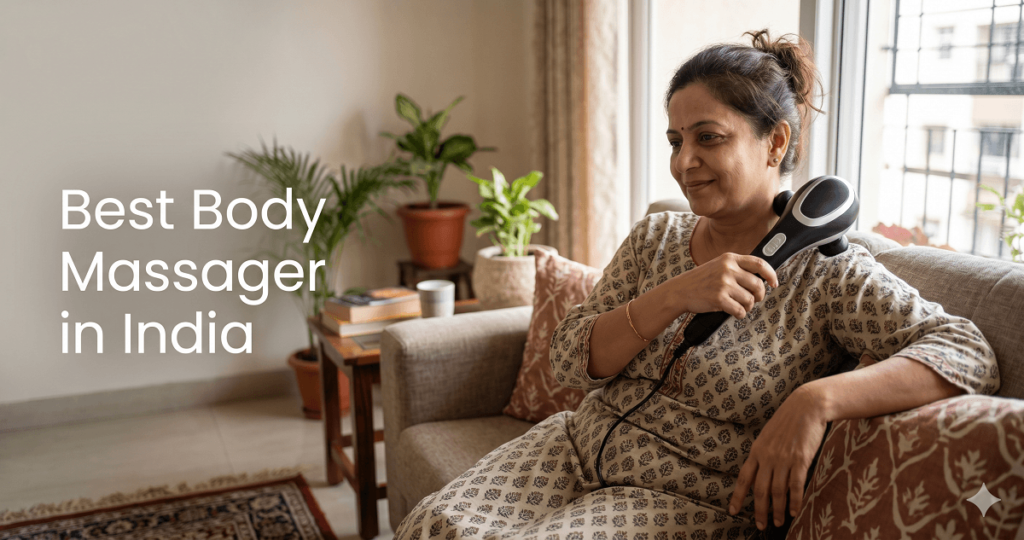
A Body Massager can make everyday relaxation easier. From handheld devices to massage guns and foot massagers, there are many options for different needs. The right device can fit into a simple home routine, after-work break, or post-exercise recovery plan. This guide explains how different massagers work, what features matter, how they can be used, and what to consider before buying one.

Cult Impact Deep tissue massage gun, Full body gun massager
Cult Impact Deep tissue massage gun, 3000mAh battery, 6-speed intensity, Silicone round head, Full body gun massager, Silicone Round head, Powerful Motor, Cordless and Ergonomic Design, Deep Tissue Percussion.
- Special Features: Massage Gun
- Specific Uses For Product: Head Massage, Muscles, Relaxing Soft Tissues
- Use for : Body and larger muscle areas, according to the manufacturer's instructions
- Key Features : 6 intensity levels, 3000mAh battery, cordless design, ergonomic grip, and multiple massage attachments


What Is a Body Massager?
A body massager is a device designed to provide mechanical massage machine through vibration, kneading, percussion, rolling, or other movements. Different models are made for specific areas such as the neck, back, legs, feet, or several parts of the body.
These devices come in many shapes and sizes. Some are small enough to carry in a bag, while others are designed for use at home. Choosing between them depends on the user’s routine, preferred massage style, target area, and desired features.
How We Evaluate Body Massagers
At Artik Mart, our goal is to help readers compare body massagers based on practical needs, product specifications, usability, and overall value. Our recommendations consider the type of massage, intended body area, available features, and the information provided by manufacturers and retailers.
Our Evaluation Criteria
- Intended use: We assess whether a device is designed for general relaxation, targeted muscle massage, or use on a specific body area.
- Comfort and usability: We consider grip design, weight, controls, portability, and the ease of selecting an appropriate intensity.
- Features and attachments: We compare available speed settings, massage heads, heat functions, and other features where applicable.
- Power and maintenance: We review battery capacity, charging requirements, cleaning instructions, and operating guidance.
- Value for money: We consider listed prices alongside the features, warranty information, and product specifications available at the time of review.
- Customer feedback: Where reliable review information is available, we consider recurring feedback while recognizing that individual experiences can differ.
How to Interpret Our Recommendations
Our recommendations are based on the information available for each product. Unless explicitly stated, a product has not necessarily been physically tested by our editorial team. We distinguish verified specifications from manufacturer claims and customer feedback, and we do not treat a high rating or a long feature list as proof that a product is right for everyone.
Product prices, availability, specifications, and warranty terms can change. Check the retailer’s current listing and the manufacturer’s instructions before purchasing.
How Does a Body Massager Work?
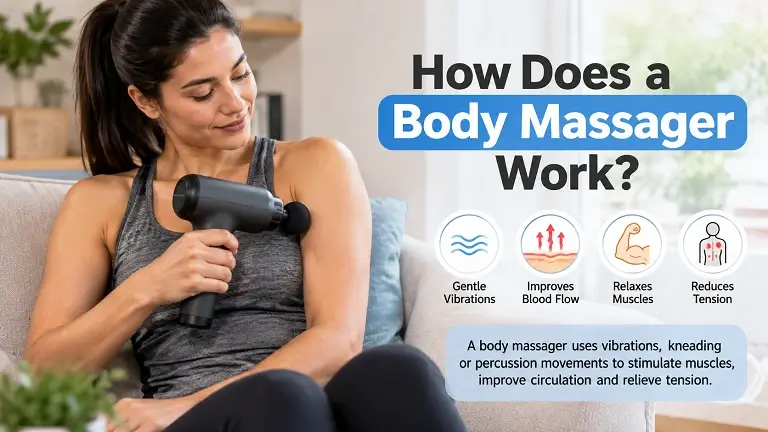
A body massager uses movement to create a massage sensation on the skin and muscles. Depending on the design, the device may vibrate, pulse, knead, roll, or apply pressure.
The speed and intensity can often be adjusted. Some models also include different massage heads for specific areas. Heat is another common feature that can add warmth during a massage session.
Electric vs Manual Body Massagers
Electric models use a motor to create movement, while manual devices rely on hand pressure. Electric options can provide consistent movement and may require less physical effort.
Manual tools are usually simple and portable. They do not need charging or a power outlet, making them convenient for quick use. The right choice depends on personal preference and how much control the user wants over the massage.
| Feature | Electric Body Massager | Manual Body Massager |
| How it works | Uses a motor for movement or vibration | Uses hand pressure and movement |
| Effort required | Less physical effort | Requires hand movement |
| Power source | Battery or electricity | No power needed |
| Control | Speed and intensity settings may be available | You control pressure and movement |
| Portability | Depends on the model | Usually lightweight and portable |
| Best for | Convenient, consistent massage | Simple and flexible massage use |
Best Body Massager Types Compared
The best full body massager depends on the area you want to target, your preferred massage style, and how you plan to use the device. Compare the main types below before deciding which features matter most to you.
| Massager Type | Common Use | Key Features to Compare | Potential Limitation |
|---|---|---|---|
| Massage Gun | Targeted muscle massage | Speed settings, attachments, grip, battery life | Can feel too intense for some users |
| Neck and Shoulder Massager | Neck and shoulder comfort | Fit, kneading action, intensity, heat controls | May not suit every body shape or posture |
| Foot Massager | Foot relaxation | Massage modes, foot-space dimensions, cleaning | Larger models can take up storage space |
| Handheld Body Massager | Flexible, targeted use | Weight, reach, grip, power source | Some areas may be difficult to reach |
| Shiatsu Massager | Kneading-style massage | Node movement, pressure settings, coverage area | Pressure may feel uncomfortable for some users |
| Manual Massager | Simple, portable massage | Shape, grip, ease of cleaning | Requires more physical effort |
| Vibrating Massager | General relaxation and light massage | Vibration settings, intensity, size and controls | May not provide the same targeted pressure as a percussion massager |
Benefits of Using a Body Massager
A body massager may help some people relax and temporarily reduce the sensation of muscle tension. However, its benefits depend on the device, how it is used, and the individual’s needs. Massage devices should be viewed as personal comfort tools rather than proven treatments for injuries or medical conditions.
Potential Benefits
- Relaxation: A comfortable massage session may help you unwind after a busy day.
- Temporary muscle comfort: Some people use massage devices to ease the feeling of muscle tightness.
- Convenience: Home-use devices can make short self-care sessions easier to fit into a routine.
- Targeted massage: Different attachments and device designs allow users to focus on selected muscle areas.
- Personalized settings: Adjustable intensity and massage modes can help users choose a more comfortable experience.
What Does the Evidence Say?
Research on massage and percussion devices suggests that some short-term outcomes, such as flexibility or perceived muscle soreness, may improve in certain circumstances. However, results vary, and findings from one device or study should not automatically be applied to every body massager.
A massage device should not be relied on to diagnose, treat, or cure a medical condition. If you have persistent pain, a recent injury, or a medical condition that may affect safe use, consult a qualified healthcare professional.
How to Use a Body Massager Effectively
Using a body massager correctly starts with choosing the right attachment, intensity, and technique for the intended body area. Always read the manufacturer’s instructions before your first session, as recommended usage varies by device.
Follow these practical steps:
- Start with a comfortable setting: Choose a low intensity and increase it only if the sensation remains comfortable.
- Keep the device moving: Avoid holding a massage gun or percussion device over one spot for too long.
- Use the correct attachment: Select a head recommended for the target muscle and follow the device-specific instructions.
- Avoid excessive pressure: A massage should not cause sharp pain, numbness, or unusual discomfort.
- Follow the recommended session length: Longer sessions and higher intensity do not necessarily provide better results.
- Clean and store the device properly: Follow the manufacturer’s cleaning, charging, and storage instructions.
Stop using the device if you experience pain or other concerning symptoms. If you have an injury, persistent pain, or a medical condition that may affect safe use, seek advice from a qualified healthcare professional.
Best Body Massager for Muscle Recovery After Exercise
After exercise, some people use massage devices as part of their recovery routine. Percussion and vibration devices are popular choices for this purpose.
A suitable model should offer adjustable intensity and useful attachments. A lower setting may be more comfortable after a demanding workout. Users with injuries or medical concerns should seek professional advice before adding massage to their recovery routine.
Portable Body Massager for Travel and Desk Workers
A portable device can be convenient for people who spend long periods away from home. Compact handheld models can fit into a work bag or travel case.
Desk workers may also prefer smaller devices that are easy to use during a break. Battery life, weight, noise level, charging method, and grip are important features when portability matters.
How to Use a Massage Gun & Deep Tissue Massager
A massage gun should be moved slowly across the intended muscle area. It should not be pressed aggressively against the body.
Massage guns provide mechanical percussive massage and may be useful for short-term muscle relaxation, flexibility, or recovery-related routines. However, research is still developing and results differ depending on the person, device, technique, and outcome being measured.
A massage gun should not be described as a treatment or cure for an injury, nerve condition, chronic pain condition, or other medical problem. If you have an injury or ongoing unexplained pain, seek appropriate professional advice rather than relying on a massage device alone.
How Long Should You Use a Body Massager Each Day?
There is no single session length that suits everyone. The manufacturer’s instructions should be the first guide because recommended use varies by device.
Short sessions are often easier to fit into a daily routine. Users should avoid assuming that longer sessions or stronger settings provide better results. If soreness, pain, numbness, or unusual discomfort develops, the session should be stopped.
Body Massager for Neck and Shoulder Relaxation at Home
A neck and shoulder device can be used while sitting comfortably at home. Models with adjustable intensity and heat can provide a more personalized experience.
The device should be positioned according to the manufacturer’s instructions. Users should avoid placing strong pressure directly over the front of the neck or other sensitive areas.
Body Massager Buying Guide: Features to Look For
Choosing the right device becomes easier when the important features are compared before purchase.
Key factors include:
- Massage type
- Intensity settings
- Heat function
- Number of attachments
- Battery life
- Charging method
- Weight and size
- Noise level
- Ease of cleaning
- Warranty and manufacturer support
The best option depends on the user’s intended use rather than the number of features alone.
Heated Body Massager Options
Heat is a popular feature in many massage devices. It can add warmth to a session and may make the massage feel more comfortable.
A heated model should offer simple temperature controls and clear operating instructions. Users should also follow the manufacturer’s recommended heating time and avoid using heat on areas where it is not appropriate.
Massage Gun Attachments Explained
Massage guns often include several attachments. Each head can have a different shape and surface designed for a particular style of use.
Common attachments include:
- Round heads: General-purpose use
- Flat heads: Broader contact
- Bullet heads: More focused contact
- Fork-shaped heads: Designed for areas around muscles and tendons
The manufacturer’s instructions should always take priority because attachment recommendations vary between models.
Cordless vs Corded Body Massagers
Cordless devices offer greater freedom of movement and are convenient for travel. Their main limitation is battery life.
Corded models can provide continuous operation without charging. They may work well for people who use a device in one location.
A buyer should compare charging time, battery capacity, cable length, portability, and expected usage before choosing between the two.
Body Massager Safety Tips
Use a body massager according to the manufacturer’s instructions. Start with a low or comfortable intensity and avoid assuming that stronger pressure or longer sessions are better.
Avoid using a massage device directly over:
- Open wounds, broken or irritated skin
- A fresh injury or area of significant swelling
- Bones or joints
- The front of the neck or other sensitive areas
- Any area that becomes painful or unusually uncomfortable
Stop using the device if you experience sharp pain, numbness, dizziness, unusual swelling, or another concerning symptom.
When to Ask a Healthcare Professional
People with certain medical conditions or medical risk factors may need specific precautions before using forceful or deep massage. This can include people taking blood-thinning medicines, people with bleeding-related conditions, some people with osteoporosis or other bone conditions, people recovering from surgery or injury, and people with unexplained or persistent pain.
Pregnant people should discuss whether massage is appropriate with their healthcare professional, particularly when using stronger massage techniques or devices.
Massage devices are intended for personal comfort and self-care. They should not be presented as a treatment or cure for a medical condition, and they should not be used to delay appropriate medical evaluation.
Conclusion
A Body Massager can be a convenient addition to a simple self-care routine. Full body devices, handheld models, massage guns, neck and shoulder massagers, foot devices, and deep tissue options each serve different purposes.
The right choice depends on the user’s target area, preferred massage style, portability needs, comfort level, and desired features. By comparing these factors and following safe-use instructions, users can choose a device that fits naturally into their everyday routine.
FAQs
Is a body massager good for daily relaxation?
A body massager can be included in a daily relaxation routine when it is used according to the manufacturer’s instructions. Short, comfortable sessions are generally easier to fit into everyday life.
Can a massage gun replace a professional massage?
A massage gun provides mechanical massage at home, but it does not replace an assessment or hands-on care from a qualified professional. It is best viewed as a personal-use device.
Are heated body massagers better?
Heat is a preference and a feature rather than a requirement. Some users enjoy the added warmth, while others prefer a standard massage device. The choice depends on comfort and intended use.
How should a beginner choose a body massager?
A beginner can start by identifying the main body area and preferred massage style. Adjustable intensity, simple controls, comfortable handling, and clear instructions are useful features for first-time users.
How often should a body massager be used?
Usage depends on the specific device and its manufacturer’s instructions. Users should follow the recommended session length and frequency rather than assuming that more frequent or longer use is better.