A Liquid Diet can feel confusing when you are already dealing with surgery, stomach trouble, or a medical test. Knowing what you can drink and eat can bring peace of mind. The wrong choice can affect a test, recovery, or nutrition. A simple plan, clear food list, and medical guidance can make each day easier and safer.
What Is a Liquid Diet and Why Does It Matter for Your Daily Nutrition?
A Liquid Diet replaces solid foods with liquids or foods that become liquid. The exact rules depend on whether you are following a clear or full liquid plan. Your healthcare provider should tell you which type is right for you.
- Clear liquid diets allow only transparent liquids.
- Full liquid diets allow more foods, including milk, strained soups, and pudding.
- The goal may be hydration, easier digestion, recovery, or preparation for a test.
What Is a Clear Liquid Diet and When Is This Stricter Plan Used?
A clear liquid diet includes foods and drinks you can see through at room temperature. Common choices include water, clear broth, pulp-free juice, plain tea, gelatin, and certain clear drinks. It is often used before medical tests or for short periods during some illnesses.
Common clear choices:
- Water
- Clear broth
- Apple or white grape juice without pulp
- Plain tea or coffee without milk
- Gelatin
- Clear sports drinks
- Ice pops without fruit pieces
What Is a Full Liquid Diet and How Does It Work?

A full liquid diet gives you more choices because the food does not need to be clear. It must still be smooth and free from chunks, seeds, hard pieces, or solid food. Milk, smooth yogurt, blended shakes, strained cream soups, pudding, custard, thin cooked cereals, and pulp free juice may fit the plan when your healthcare provider allows them.
Think of it as a bridge between a clear liquid diet and normal eating. It can make eating easier while your body heals, but it should still be planned carefully so you get enough calories, protein, fluids, vitamins, and minerals.
Why Would I Need a Liquid Diet, Especially When I Am a Patient?
A Liquid Diet for patients may be recommended for several different medical reasons. Your doctor may suggest it after certain surgeries, when you have trouble chewing or swallowing, before a medical procedure, or while your digestive system recovers from a health problem. The reason matters because the rules are not the same for everyone.
A colonoscopy preparation, for example, may require clear liquids only, while a person recovering from surgery may move from clear liquids to a full liquid diet. Never assume that a liquid diet you find online is the correct plan for your condition. Follow the instructions given by your medical team.
Liquid Diet After Surgery: What Should You Know During Recovery?
After some stomach or intestinal surgeries, a liquid plan can help you move toward normal eating. Your surgeon may start with clear liquids and later allow fuller liquids or soft foods. Follow the exact schedule given to you because recovery plans are different for each person.
Helpful habits:
- Take small sips.
- Eat or drink slowly.
- Choose approved calorie and protein sources.
- Watch for pain, vomiting, or trouble swallowing.
- Ask before adding solid foods.
Colonoscopy Clear Liquid Diet: What Foods Can You Have Before the Test?
Before a colonoscopy, the goal is to keep the bowel clear so the doctor can see properly. Your clinic will give you exact instructions about when to start and stop. Common choices may include clear broth, pulp-free juice, gelatin, and plain tea or coffee without milk.
Important: Some tests require you to avoid certain colors, such as red liquids. Always follow your clinic’s bowel preparation instructions.
Liquid Diet for Diverticulitis: How Can Eating Change During a Flare-Up?
During some uncomplicated diverticulitis flare-ups, a doctor may suggest a clear liquid diet for a short time. As symptoms improve, solid foods are usually added back slowly. Do not treat a suspected flare-up with diet alone. Severe symptoms or complications need medical care.
Liquid Fasting Diet: What You Need to Know Before You Try It
Liquid fasting is not the same as a medically prescribed liquid diet. A full liquid plan can provide calories and protein, while a fasting plan may provide very little energy. Long fasting periods can leave you weak and may reduce important nutrient intake.
Before fasting, consider:
- Why are you doing it?
- How long will it last?
- Are medicines involved?
- Do you have a health condition?
- Can you stay hydrated?
Liquid Diet for Weight Loss: Is It a Safe Long-Term Weight Loss Plan?

A Liquid Diet can reduce food choices and calories, but that does not make it a good long-term weight loss plan. Liquid meals can also be less filling for some people. Sustainable weight management usually needs balanced nutrition, enough protein, fiber, and healthy eating habits.
For weight goals, focus on:
- Balanced meals
- Reasonable portions
- Protein-rich foods
- Vegetables and fruit when allowed
- Regular physical activity
- Guidance from a qualified professional when needed
What Can I Eat on a Liquid Diet Without Making My Meal Plan Too Boring?
Your choices depend on whether you are following a clear or full Liquid Diet. Full liquid plans can include milk, strained soups, pudding, ice cream without solid pieces, liquid supplements, and certain refined cereals when approved.
Think in groups:
- Dairy: milk, yogurt drinks, approved pudding
- Soups: strained cream soups and broth
- Grains: refined cooked cereals when approved
- Drinks: water, tea, juice, milk
- Other: gelatin, popsicles, liquid nutrition drinks
Clear Liquid Diet Foods: Simple Choices That Can Help You Stay Hydrated
Clear Liquid Diet foods are limited, but you can still create variety. Water supports hydration, while broth can add flavor and sodium. Pulp-free juices provide carbohydrates. Gelatin and ice pops can make the plan feel less repetitive.
Simple options include:
- Water
- Clear broth
- Pulp-free apple juice
- Pulp-free grape juice
- Plain tea
- Gelatin
- Clear ice pops
Full Liquid Foods and Drinks: Dairy, Soups, Grains, Beverages, and More
A full Liquid Diet gives you more choices than a clear plan. MedlinePlus lists milk, strained soups, pudding, plain ice cream, juice, tea or coffee with milk, gelatin, and liquid nutrition supplements among possible choices. Some foods, such as refined cereals, may need provider approval.
| Food group | Examples |
| Dairy | Milk, lactose free milk, smooth yogurt, pudding, custard |
| Soups | Strained cream soup, smooth pureed soup, broth |
| Grains | Thin cream of rice or cream of wheat |
| Drinks | Water, tea, coffee, pulp free juice |
| Protein | Approved protein shakes and nutritional drinks |
| Other | Plain gelatin, smooth frozen yogurt, melted butter or oil |
What Foods and Drinks Should You Avoid on a Liquid Diet for Better Safety?

Avoid foods that contain solid pieces when you are following a full liquid plan. That includes bread, crackers, rice, pasta, meat, poultry, fish, whole eggs, raw vegetables, whole fruit, nuts, seeds, chunky soups, and yogurt containing fruit pieces.
On a clear liquid plan, the restrictions are even tighter, so milk, creamy soup, and other cloudy liquids may not be allowed. Alcohol should also be avoided. If you are preparing for a procedure, follow the exact color, timing, and medication instructions provided by your medical team.
Liquid Diet Ideas and Recipes That Make Each Meal Feel More Enjoyable
A Liquid Diet does not have to mean drinking plain water all day. You can add variety with approved soups, flavored gelatin, milk-based drinks, fruit juices without pulp, and simple smoothies when your plan allows them.
Easy ideas:
- Strained vegetable soup
- Milk and banana drink
- Plain yogurt drink
- Warm broth
- Cream of rice
- Homemade fruit drink without pulp
How Can You Build a Liquid Diet Sample Menus and Meal Plans for Your Day?
Planning ahead can make a Liquid Diet feel much less stressful. Instead of deciding what to drink every time hunger appears, prepare a simple schedule. Keep approved drinks ready in the refrigerator and have smooth foods prepared in advance if your full liquid plan allows them. A written plan can also help you notice whether you are getting enough fluids and protein.
What Does a Daily Sample Menu Look Like for a Full Liquid Diet?
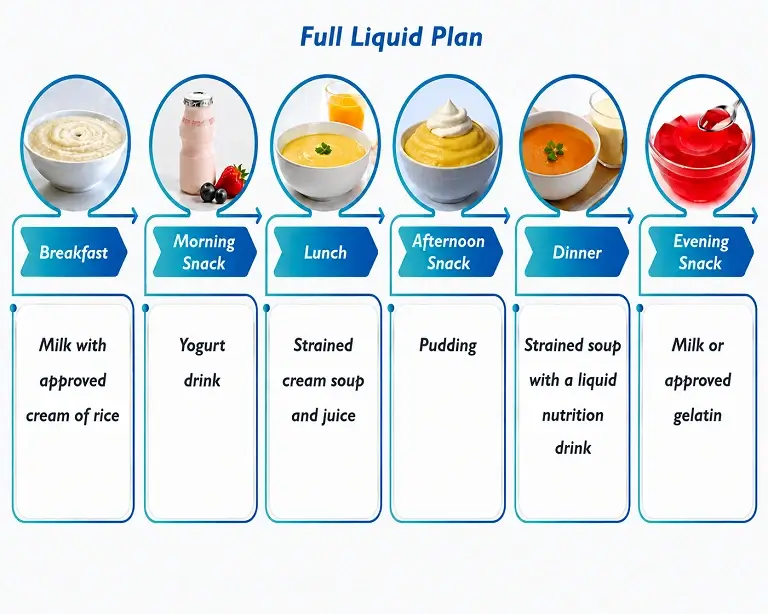
A sample day can include a mix of dairy, broth, approved cereals, juice, and liquid nutrition foods. This is only an example. Your calorie, protein, fluid, and medical needs may be different.
Example menu:
- Breakfast: Milk with approved cream of rice
- Morning snack: Yogurt drink
- Lunch: Strained cream soup and juice
- Afternoon snack: Pudding
- Dinner: Strained soup with a liquid nutrition drink
- Evening snack: Milk or approved gelatin
Sample 7-Day Liquid Diet Meal Plan With Familiar Flavors and Simple Choices
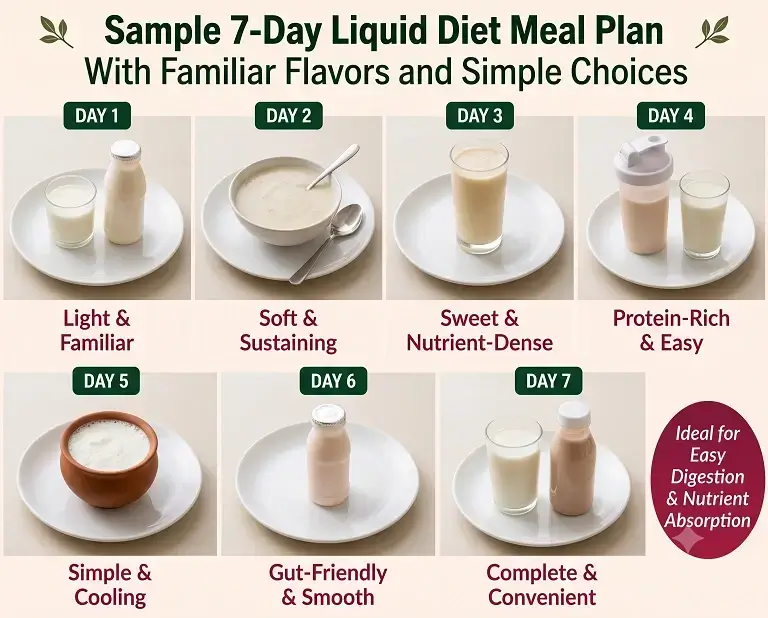
Indian families can add familiar flavors while keeping food smooth and approved. The exact ingredients depend on your diet order. For a clear plan, many of these foods would not be suitable because they contain solids.
| Day | Breakfast | Lunch | Dinner |
| 1 | Milk and smooth yogurt drink | Strained dal broth | Smooth vegetable soup |
| 2 | Thin cream of rice | Strained moong dal soup | Plain yogurt drink |
| 3 | Smooth banana milk drink | Strained vegetable broth | Thin dal soup |
| 4 | Milk with approved protein powder | Smooth pumpkin soup | Strained dal broth |
| 5 | Plain lassi without pieces | Smooth tomato soup | Thin cream of rice |
| 6 | Smooth yogurt drink | Strained lentil soup | Vegetable broth |
| 7 | Milk and approved shake | Smooth soup | Plain yogurt drink |
Health, Safety, and Nutrition
A Liquid Diet can be useful, but it is not automatically complete or safe for every person. Clear liquids provide very limited protein, calories, vitamins, and minerals, so they are generally intended for short periods. Full liquid diets provide more nutrition but can still be low in fiber, iron, and some vitamins and minerals. Cleveland Clinic notes that full liquid diets are commonly used for a few days to about a week depending on the reason, while longer use may require supplements or dietitian support.
Key Nutrients, Benefits, Risks, and Safe Duration
Protein deserves special attention because your body needs it for repair and muscle maintenance. Calories matter too, especially during recovery from surgery or illness. Fluids help prevent dehydration, while vitamins and minerals support normal body functions.
| Area | What to consider |
|---|---|
| Protein | Milk, yogurt, and approved protein drinks can help |
| Calories | Small frequent meals may make intake easier |
| Fluids | Drink regularly according to your care plan |
| Fiber | Often low on liquid diets |
| Vitamins | May require attention if the diet lasts longer |
| Blood sugar | Sweet drinks may affect glucose levels |
| Duration | Follow your healthcare provider’s timeline |
What Are the Benefits and Possible Risks of Following a Liquid Diet?
A Liquid Diet can make eating easier when solid food is not suitable. It can support hydration and may be part of recovery or medical preparation. The downside is that a restricted diet can become low in fiber and some nutrients, especially when followed for too long.
Possible benefits:
- Easier swallowing
- Less work for digestion
- Better hydration
- Medical test preparation
- A step between clear liquids and soft foods
Possible concerns:
- Hunger
- Low fiber
- Low nutrient variety
- Not enough calories or protein
- Weakness if poorly planned
How Long Should I Stay on a Full Liquid Diet Without Risking Poor Nutrition?
There is no single safe length for everyone. Your doctor may recommend a Liquid Diet for a short period after surgery or around a medical test. If you need a full liquid plan for a longer time, professional nutrition support is important.
Do not extend a medically prescribed diet on your own.
Liquid Diet in Pregnancy: What Safe Practices Should Expecting Mothers Follow?
Pregnancy increases the need for many nutrients, so a restricted Liquid Diet should not be started casually. If nausea, surgery, illness, or a medical test requires liquid foods, speak with your obstetric care team. They can help you protect hydration, calories, protein, and key nutrients.
- Safe fluids
- Protein needs
- Prenatal vitamins
- Calorie needs
- How long the diet should continue
- When to return to solid foods
Practical Tips to Follow a Liquid Diet Without Feeling Lost or Overwhelmed
A little preparation can make your day much easier. Keep approved drinks nearby and plan several small meals. Read labels carefully, especially on nutrition drinks and flavored products.
Helpful tips:
- Follow your written diet instructions.
- Drink at regular times.
- Keep a simple food log.
- Choose different flavors to avoid boredom.
- Ask before adding new foods.
- Keep approved foods ready.
- Contact your healthcare provider if symptoms worsen.
Liquid Diet Product Comparison: Clear Liquids vs Full Liquids vs Liquid Fasting
| Feature | Clear Liquid Diet | Full Liquid Diet | Liquid Fasting |
|---|---|---|---|
| Main purpose | Medical preparation or short-term use | Recovery, swallowing, or medical needs | Personal fasting |
| Solid foods | No | No | Usually no |
| Milk | Usually no | Often allowed | Depends on the plan |
| Broth | Yes | Yes | Depends |
| Pudding | Usually no | Often allowed | Usually no |
| Protein options | Limited | More options | Can be limited |
| Medical supervision | Often required | Recommended when prescribed | Important for higher-risk people |
| Long-term use | Not suitable without care | Needs professional planning | Not recommended as a casual long-term diet |
How to Use This Liquid Diet Guide and Get the Most From It
Use this guide as a planning tool, not as a replacement for medical advice. Start by finding out which type of Liquid Diet your healthcare provider wants you to follow.
Start here:
- Confirm clear or full liquids.
- Write down approved foods.
- Plan meals for the whole day.
- Keep fluids within reach.
- Include approved protein and calorie sources.
- Follow your doctor’s timeline.
- Ask before changing the diet.
Conclusion
A Liquid Diet can be much easier when you know the rules before you start. The biggest difference is between clear liquids and full liquids. Clear plans are more limited, while full liquid plans offer more choices and can provide more nutrition.
If you are using a Liquid Diet because of surgery, a medical test, diverticulitis, swallowing problems, or another health concern, follow your healthcare provider’s instructions first. Use this guide to plan, shop, and stay organized.
FAQs
What Is the Purpose of a Liquid Diet?
A Liquid Diet provides fluids and easy-to-digest nutrition when solid foods are not suitable. It may be used for medical tests, recovery, swallowing problems, or short-term digestive issues.
How Long Should a Liquid Diet Be Followed?
The length depends on your health needs and your healthcare provider’s advice. Clear liquid diets are usually short-term, while full liquid diets may be used longer with medical guidance.
Can I Get Enough Protein on a Liquid Diet?
Yes, especially with a full liquid diet. Milk, yogurt drinks, liquid nutrition shakes, and approved protein supplements can help you meet your protein needs.
What Foods Should Be Avoided on a Liquid Diet?
Avoid solid, chunky, or unapproved foods based on your diet plan. Clear liquid diets usually exclude milk and yogurt, while full liquid diets may restrict foods with pieces or solid textures.
How Do I Transition Back to Solid Foods?
Return to solid foods only when your healthcare provider says it is safe. You may gradually move from clear liquids to full liquids, soft foods, and then your regular diet.
What Should I Monitor While on a Liquid Diet?
Keep track of your fluids, energy levels, hunger, digestion, and overall comfort. Contact your healthcare provider if you have severe weakness, repeated vomiting, worsening pain, or trouble swallowing.
Is There Anything Else I Should Know Before Starting a Full Liquid Diet?
Check ingredients carefully before choosing foods or drinks. If you follow the diet for more than a short time, ask your healthcare provider about calories, protein, vitamins, minerals, and possible supplements.
Can I Drink Coffee or Tea on a Liquid Diet?
Plain tea and black coffee may be allowed on some clear liquid plans. Full liquid diets may also allow milk or cream, but always follow specific instructions given for medical tests or treatment.
Customer Reviews
No reviews yet. Be the first to leave one.