
If you have ever searched what does magnesium glycinate do for the body, you have probably seen a long list of claims about sleep, stress, muscles, nerves, energy and heart health. Magnesium is an essential mineral involved in hundreds of body processes, including muscle and nerve function, blood sugar control, blood pressure, protein production and bone health.
For many people, the appeal of Magnesium Glycinate is simple: they want a magnesium supplement that fits easily into everyday life and is gentle on the stomach.
What Is Magnesium Glycinate?
Magnesium Glycinate is a form of magnesium in which magnesium is bound to glycine, an amino acid. It is often described as a chelated form because the mineral is attached to an organic compound. This design is one reason many people choose it when they want a magnesium supplement that is generally considered gentle on digestion.
The important detail when shopping is the amount of elemental magnesium, not simply the larger number printed beside “magnesium glycinate.” For example, a product may list a large amount of the magnesium glycinate compound while providing a smaller amount of actual elemental magnesium. A current Naturaltein product, for example, lists 1,200 mg of magnesium glycinate while providing 150 mg of elemental magnesium per tablet.
That distinction makes comparing products much easier. Instead of looking only at the biggest number on the front of the bottle, turn the package around and check the Magnesium Supplement Facts or nutrition panel.
Is Glycine the Same as Magnesium Glycinate?
No. Glycine and Magnesium Glycinate are not the same thing. Glycine is an amino acid, while magnesium glycinate is a compound formed by combining magnesium with glycine.
Think of it like a key and a keychain. They are related, but they are not identical. Glycine has its own role in the body, while magnesium glycinate is used as a source of magnesium.
This difference matters because shoppers sometimes see the word “glycine” and assume they are buying a magnesium product. Check the full ingredient name and, most importantly, the amount of elemental magnesium supplied per serving.
What Is the Difference Between Magnesium Glycinate and Magnesium Bisglycinate?
The terms magnesium glycinate and magnesium bisglycinate are often used for closely related chelated forms of magnesium. Bisglycinate generally refers to magnesium bound to two glycine molecules.
For everyday shopping, the bigger issue is not whether the front label says glycinate or bisglycinate. Look at the elemental magnesium amount, serving size, other ingredients, quality testing and directions for use.
Magnesium Glycinate vs Magnesium Bisglycinate
| Feature | Magnesium Glycinate | Magnesium Bisglycinate |
| What it means | Common name for a magnesium-glycine compound | More specific chemical name |
| Glycine molecules | Generally refers to two glycine molecules in the chelated compound | Two glycine molecules |
| Chemical identity | Same compound in common supplement usage | Same compound in common supplement usage |
| Molecular formula | C₄H₈MgN₂O₄ | C₄H₈MgN₂O₄ |
| Also called | Magnesium diglycinate | Magnesium glycinate, magnesium diglycinate |
Top Health Benefits of Magnesium Glycinate
Magnesium is an essential mineral that your body needs every day. It supports muscle and nerve function, blood sugar control, blood pressure, protein production, bone health, and DNA production.
But there is an important point to remember: getting more magnesium does not automatically mean getting more health benefits. If you already get enough from your diet, a supplement may not make a noticeable difference.
1. Mental Health and Sleep: Which Magnesium Is Best for Sleep?
Magnesium glycinate is one of the most popular forms of magnesium for people who want better sleep.
Magnesium helps support normal nerve and muscle function. Some research has also looked at magnesium supplements and sleep quality.
A systematic review of three randomized trials involving 151 older adults found that magnesium reduced the time needed to fall asleep by around 17 minutes compared with placebo. However, the researchers rated the evidence as low to very low quality.
- Magnesium may help some people sleep better.
- It is not a sleeping pill.
- There is not enough strong evidence to say magnesium glycinate is the best magnesium for sleep.
- A regular sleep schedule and good bedtime habits are still important.
2. Magnesium Glycinate for Migraines
Magnesium has a more established role in migraine discussions than many people realize. The American Migraine Foundation reports that magnesium may help with migraine prevention, particularly migraine with aura and menstrual-related migraine. The organization notes that magnesium received a “probably effective” rating from the American Headache Society and American Academy of Neurology review of migraine prevention treatments.
That does not mean Magnesium Glycinate should replace prescribed migraine treatment. Different forms and doses have been studied, including magnesium oxide, citrate and intravenous magnesium sulfate.
If you experience frequent migraines, speak with a healthcare professional before starting a high-dose supplement. Magnesium can interact with certain medicines, and people with kidney disease need extra caution.
3. Brain and Nerve Health

Your nervous system needs magnesium to work properly. Magnesium is involved in many processes that help your nerve cells communicate and function normally. This is one reason maintaining adequate magnesium intake is important.
However, it is better to avoid claims that magnesium glycinate will automatically improve memory, focus or mood.
Good food sources include:
- Nuts and seeds
- Beans and other legumes
- Whole grains
- Green leafy vegetables
- Some fortified foods
4. Blood Sugar and Energy

Your body uses magnesium in energy metabolism and blood glucose regulation. Magnesium is also involved in making proteins and DNA, which shows how deeply this mineral is woven into everyday cell activity.
People sometimes describe magnesium as an “energy booster,” but that phrase can be misleading. Magnesium does not work like caffeine. If you are deficient, correcting the deficiency may support normal energy metabolism, but taking extra magnesium when your intake is already adequate is not guaranteed to make you feel more energetic.
Think of magnesium as part of the machinery rather than fuel in the tank. The machinery needs it to run, but adding more does not automatically make the machine run faster.
5. Improve Bone Health and Muscle Function
Magnesium contributes to normal muscle function and bone health. It is involved in muscle contraction and relaxation and also participates in hundreds of enzyme reactions in the body.
This is one reason magnesium supplements are popular with active adults. For stronger muscles and bones, however, magnesium is only one piece of the puzzle.
You should also pay attention to:
- Protein intake
- Calcium
- Vitamin D
- Regular resistance exercise
- Adequate calories
- Good hydration
- Overall diet quality
6. Heart Benefits and Kidney Stone Prevention
Magnesium supports normal heart, blood vessel and muscle function. It also plays a role in healthy blood pressure and blood sugar regulation. However, Magnesium Glycinate should not be considered a treatment for high blood pressure, heart disease or other cardiovascular conditions. If you have a heart condition or take blood pressure medicines, speak with a healthcare professional before using a magnesium supplement.
Kidney stone prevention also depends on several factors, including the type of stone, fluid intake, diet and personal medical history. Magnesium may have a role in some situations, but it is not a universal solution. If you have recurring kidney stones, get personalized medical advice rather than using Magnesium Glycinate as a self-treatment.
7. Antioxidant and Anti-Inflammatory Support
Magnesium is not an antioxidant like vitamins C or E. Instead, it supports hundreds of enzyme reactions involved in normal energy production, muscle function, nerve activity and other cellular processes. This means it is more accurate to describe Magnesium Glycinate as supporting normal body functions rather than claiming that it directly provides an antioxidant or anti-inflammatory cure.
A balanced diet is still important because foods such as leafy greens, fruits, vegetables, whole grains, nuts and seeds provide magnesium along with fiber, vitamins, minerals and other beneficial plant compounds. Together, these nutrients can support overall health and normal cellular function.
Magnesium Glycinate vs. Other Forms of Magnesium
Not all magnesium supplements are identical. Different forms contain different amounts of elemental magnesium and can behave differently in the digestive system.
Your goal should not always be to find the “strongest” form. Instead, consider what you need, how your stomach reacts, how much elemental magnesium you are getting and whether the product fits your health needs.
Magnesium Citrate vs Glycinate
Magnesium citrate and magnesium glycinate are both popular magnesium supplements, but they may suit different needs:
- Magnesium Citrate: Often used when you also want support for regular bowel movements. It can have a mild laxative effect, especially in higher amounts.
- Magnesium Glycinate: A popular choice for daily magnesium supplementation when you want to avoid a strong laxative effect.
- For constipation: Magnesium citrate may be the more suitable option because of its bowel-supporting effect.
- For daily use: Magnesium glycinate may feel gentler for people who do not want a laxative effect.
Magnesium Oxide vs Magnesium Glycinate
Magnesium oxide and magnesium glycinate are both popular magnesium supplements, but they are not identical. The main difference is how much elemental magnesium they provide and how well your body tolerates them.
| Feature | Magnesium Oxide | Magnesium Glycinate |
|---|---|---|
| What it is | Magnesium combined with oxygen | Magnesium bound to glycine |
| Elemental magnesium | Relatively high by weight | Lower by weight |
| Absorption | Generally less well absorbed | Generally considered better absorbed |
| Digestive effects | More likely to cause loose stools at higher amounts | Usually gentler on the stomach |
| Common reason for use | Magnesium supplementation and constipation support | Everyday magnesium supplementation |
| Best for | People who may also benefit from its laxative effect | People who prioritize tolerability |
| Typical drawback | Can cause diarrhea or stomach discomfort | Often costs more than oxide |
Sources of Magnesium: Natural Foods vs Supplements
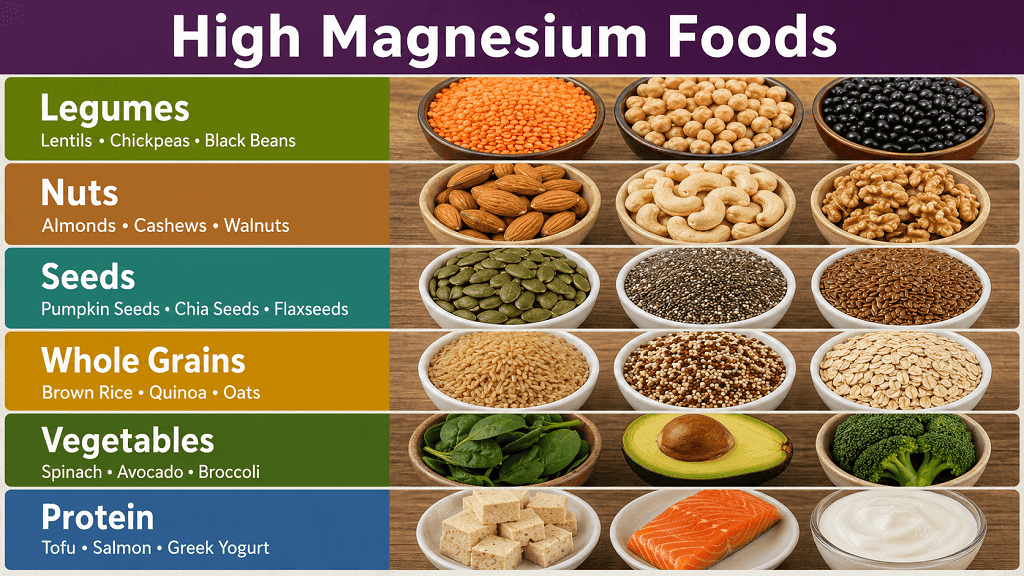
Food should usually be the first place to look for magnesium. The NIH lists legumes, nuts, seeds, whole grains and green leafy vegetables among natural magnesium sources. Milk, yogurt and fortified foods can contribute too.
Supplements can be useful when dietary intake is not enough or when a healthcare professional recommends one. They are not automatically better than food.
Top Natural Food Sources of Magnesium
A varied diet can provide magnesium without needing to count every milligram.
Good options include:
- Pumpkin and other seeds
- Almonds and other nuts
- Beans and lentils
- Spinach and other leafy greens
- Whole grains
- Fortified cereals
- Milk and yogurt
This approach also gives you protein, fiber and other nutrients. For a family-friendly routine, adding nuts to breakfast, beans to lunch or leafy greens to dinner can be a simple way to improve overall nutrition.
How to Choose the Right Supplement: Gummies vs Tablets
Gummies can be easy to take, especially for people who dislike swallowing tablets. But you should check the label for elemental magnesium, added sugar, serving size and other ingredients.
Tablets and capsules often provide more magnesium per serving in a smaller package. They can also make dose tracking easier.
When shopping for Magnesium Glycinate, look for:
- Clear elemental magnesium information
- A simple ingredient list
- Transparent serving instructions
- Appropriate quality or batch testing
- Clear warnings and storage instructions
- A reputable manufacturer
How to Use Magnesium Glycinate Supplements
Start with the label rather than assuming that every magnesium glycinate product has the same dose. Two products can contain very different amounts of elemental magnesium even when both say “Magnesium Glycinate” on the front.
Take the supplement according to the manufacturer’s directions unless your healthcare professional gives you different instructions. If you are new to magnesium, taking it with food may be easier on your stomach.
Do not stack several magnesium products without checking the total amount. Magnesium may also be present in multivitamins, antacids and laxatives.
Timing and Dosage: When and How Much to Take?
There is no universal magnesium glycinate dosage that works for every adult. Your total magnesium requirement depends on age, sex and life stage, while the appropriate supplemental amount depends on your diet and health situation.
The NIH lists adult magnesium needs at about 310 to 420 mg per day depending on sex and age. The important distinction is that these recommended amounts cover total intake, while the U.S. adult upper limit of 350 mg applies specifically to magnesium from supplements and medications, not magnesium naturally present in food.
Recommended Dosage: RDA and Tolerable Upper Intake Levels
For adults, the recommended dietary allowance is generally 400 to 420 mg per day for men and 310 to 320 mg per day for women, with different values for pregnancy and breastfeeding.
1. RDA
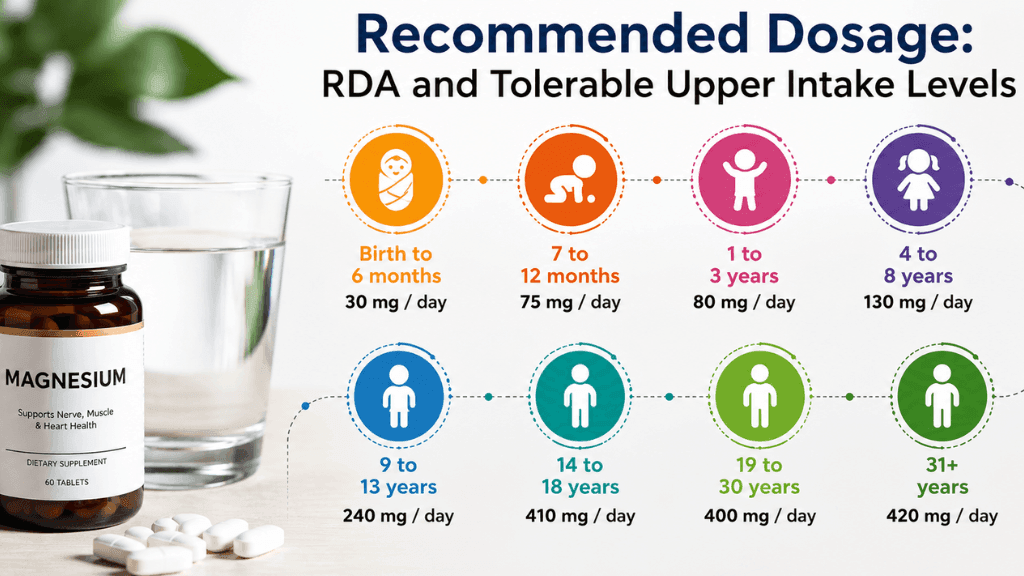
| Age Group | Men (RDA) | Women (RDA) |
| Birth to 6 months | 30 mg* | 30 mg* |
| 7 to 12 months | 75 mg* | 75 mg* |
| 1 to 3 years | 80 mg | 80 mg |
| 4 to 8 years | 130 mg | 130 mg |
| 9 to 13 years | 240 mg | 240 mg |
| 14 to 18 years | 410 mg | 360 mg |
| 19 to 30 years | 400 mg | 310 mg |
| 31+ years | 420 mg | 320 mg |
2. Tolerable upper intake levels
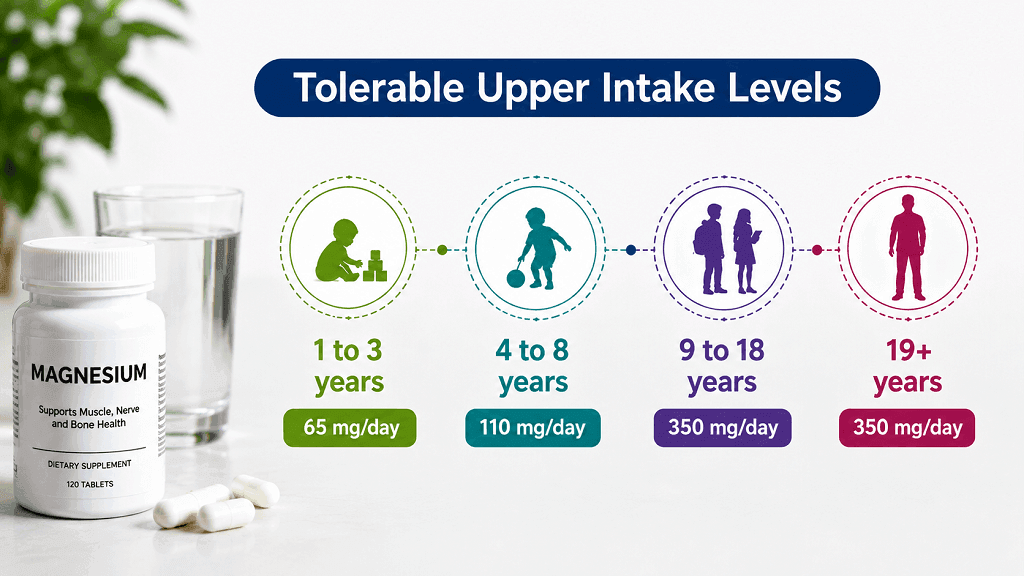
A tolerable upper intake level refers to the maximum amount of supplemental magnesium an individual can take without the risk of severe side effects. The NIH recommends the following:
| Age Group | Recommended Amount |
| 1 to 3 years | 65 mg |
| 4 to 8 years | 110 mg |
| 9 to 18 years | 350 mg |
| 19+ years | 350 mg |
When Is the Best Time to Take Magnesium Glycinate?
There is no single medically proven best time for everyone. Many people take Magnesium Glycinate in the evening because they associate it with relaxation and sleep support.
If it causes stomach discomfort, taking it with a meal may help. If your healthcare professional has recommended a specific schedule, follow that advice. The best time is often the time you can follow consistently without forgetting it.
Can I Take Magnesium Glycinate in the Morning?
Yes, many people can take magnesium glycinate in the morning. Magnesium is not a sleeping pill, so there is no rule saying it must be taken at night.
If you feel comfortable taking it in the morning and it fits your routine, that can be perfectly practical. Some people prefer evening use because they are taking it as part of a relaxation routine. Consistency matters more than chasing a perfect clock time.
How Long Before Bed Should I Take Magnesium Glycinate?
If you take Magnesium Glycinate as part of your bedtime routine, you might choose an evening window that fits your normal schedule. There is no strong evidence establishing one exact number of minutes before bed as the ideal timing.
Instead of treating the supplement like a switch that suddenly turns sleep on, build a full wind-down routine. Lower the lights, put away stimulating screens, keep your room comfortable and take your supplement according to the label.
How Long Does It Take for Magnesium Glycinate to Work?
The answer depends on why you are taking it and whether you actually have a magnesium shortfall. Some people may notice digestive effects sooner, while other goals such as sleep or migraine prevention are not something you should judge after one dose.
For migraine prevention, research and clinical guidance generally involve regular use rather than expecting immediate results.
If you take magnesium for a specific health concern and nothing changes, speak with a healthcare professional instead of continually increasing the dose.
Can You Take Ashwagandha and Magnesium Glycinate Together?
Many adults use ashwagandha and Magnesium Glycinate as part of an evening wellness routine, but “natural” does not automatically mean risk-free.
The bigger question is your individual health situation. Ashwagandha can have its own cautions and possible medicine interactions, while magnesium can also interact with certain medicines. People with kidney problems need particular care with magnesium because the kidneys help remove excess magnesium.
If you take prescription medicines, have a chronic condition, are pregnant or breastfeeding, or plan to combine several supplements, ask a healthcare professional before starting the combination.
Popular Magnesium Glycinate Brands
When comparing Magnesium Glycinate brands, focus on the label rather than choosing only because a brand is popular.
- Doctor’s Best Magnesium Glycinate: Doctor’s Best currently sells chelated magnesium lysinate glycinate products. One current product provides 200 mg elemental magnesium per two tablets, while the company also offers newer powder formats.
- Naturaltein Magnesium Glycinate: Naturaltein currently lists a 1,200 mg magnesium glycinate product that provides 150 mg elemental magnesium per tablet.
- MuscleBlaze Magnesium Glycinate: MuscleBlaze currently lists Magnesium Glycinate tablets in its product range.
Product formulas, prices and availability can change. Always check the latest label before buying.
Potential Side Effects and Risks of Magnesium Glycinate
Magnesium supplements are generally well tolerated at appropriate amounts, but more is not always better. High supplemental magnesium can cause diarrhea, nausea and abdominal cramping. Extremely high amounts can become dangerous and may lead to low blood pressure, breathing problems, irregular heartbeat and cardiac arrest.
The risk is particularly important for people with impaired kidney function because the kidneys are responsible for removing excess magnesium.
Do not assume that a supplement is safe simply because it is sold without a prescription. Treat it like any other active health product.
Common Side Effects to Watch Out For
The most common problems are digestive.
- Loose stools or diarrhea
- Stomach cramps
- Nausea
- Digestive discomfort
If symptoms appear after starting a supplement, check the serving size and talk with a healthcare professional if symptoms persist.
Risks of Taking Excess Magnesium
Taking too much supplemental magnesium can be harmful. The NIH states that very high intake can cause serious problems including hypotension, difficulty breathing, irregular heartbeat and cardiac arrest.
People with kidney disease should not self-prescribe high-dose magnesium. Extra caution is also sensible if you take antibiotics, heart medicines, diuretics or other medicines that may interact with magnesium. The American Migraine Foundation specifically warns that magnesium can interfere with certain medicines and recommends medical guidance for people with kidney disease and several other health conditions.
Magnesium Glycinate Product Comparison
| Product | Form | Listed Elemental Magnesium | What to Check Before Buying |
| Doctor’s Best High Absorption Magnesium | Lysinate glycinate chelate | 200 mg per 2 tablets | Serving size and directions |
| Naturaltein Magnesium Glycinate | Magnesium bisglycinate | 150 mg per tablet | Elemental magnesium and serving size |
| MuscleBlaze Magnesium Glycinate | Magnesium glycinate tablets | Check current label | Current formula and serving size |
| Magnesium Citrate products (General) | Magnesium citrate | Varies by brand | Digestive and laxative effects |
| Magnesium Oxide products (General) | Magnesium oxide | Varies by brand | Tolerability and actual elemental amount |
How to Choose Magnesium Glycinate for Your Shopping Needs
Shopping for supplements can feel confusing because the front of a bottle often highlights a large number. The useful number is usually the elemental magnesium amount per serving.
Before you add a product to your cart, check the supplement facts panel, serving size, ingredient list, warnings, manufacturer details and expiry information. If the product is independently tested or has accessible quality information, that can add another layer of confidence.
What Does Magnesium Glycinate Do for the Body?
So, what does magnesium glycinate do for the body? It supplies magnesium, a mineral your body needs for normal muscle and nerve function, blood sugar regulation, blood pressure regulation, protein production, bone health and DNA production.
The glycinate form is magnesium bound to glycine. People often choose it for daily supplementation because it is widely viewed as a gentle form.
Its benefits should be kept in perspective. Magnesium is important, but a supplement cannot replace a balanced diet, good sleep habits, physical activity or medical treatment.
Conclusion
Magnesium Glycinate is a popular form of magnesium because it combines magnesium with glycine and is easy to include in a daily supplement routine. The key point is that more magnesium is not always better. Adults generally need about 310 to 420 mg of total magnesium per day, depending on age and sex, while the U.S. upper limit for magnesium from supplements and medications is 350 mg per day.
When choosing a magnesium glycinate product, check the elemental magnesium amount, serving size and complete ingredient list. If you have kidney disease, take regular medicines, are pregnant or breastfeeding, or plan to use magnesium for a specific health condition, speak with a healthcare professional first. For Artik Mart shoppers, the best choice is not necessarily the strongest bottle, but a clearly labeled product that suits your needs and can be used responsibly.
FAQs
Which Magnesium Is Best for High Blood Pressure?
There is no single magnesium supplement proven to be the best treatment for high blood pressure. Magnesium may support blood pressure regulation, but it should not replace prescribed treatment.
What Is Magnesium Glycinate Used For?
Magnesium Glycinate provides magnesium, which supports nerve and muscle function, blood sugar regulation, blood pressure regulation and bone health. It is also commonly used for general magnesium intake and relaxation routines.
Is Magnesium Glycinate a Sleeping Pill?
No. Magnesium glycinate is a mineral supplement, not a sleeping pill. Some people take it as part of an evening routine, although evidence for magnesium and sleep benefits remains limited and mixed.
What Is the Best Time to Take Magnesium Glycinate?
There is no universal best time to take magnesium glycinate. Many people take it in the evening, but morning use is also fine if it suits their routine.
What Are the Drawbacks of Taking Magnesium Glycinate?
Possible side effects include diarrhea, nausea, stomach discomfort and abdominal cramping, especially with high supplemental doses. People with kidney disease should consult a healthcare professional before use.
What Is Magnesium Glycinate Best For?
Magnesium glycinate is best viewed as a convenient source of magnesium rather than a treatment for one specific condition. It may suit adults looking to support their overall magnesium intake.
What Happens to Your Body When You Take Magnesium Glycinate?
Your body receives magnesium, which supports normal nerve and muscle function, blood pressure regulation, protein production, bone health and other essential processes. Extra magnesium does not guarantee noticeable benefits if your intake is already adequate.
What Happens When You Take Magnesium Glycinate Every Day?
Daily magnesium glycinate provides a regular source of supplemental magnesium. The appropriate amount depends on your diet, elemental magnesium content and individual health needs.
Who Needs to Take Magnesium Glycinate?
Not everyone needs a magnesium supplement. People with low dietary intake or an identified need should discuss supplementation with a healthcare professional, especially if they have kidney disease or take medicines.
Customer Reviews
No reviews yet. Be the first to leave one.