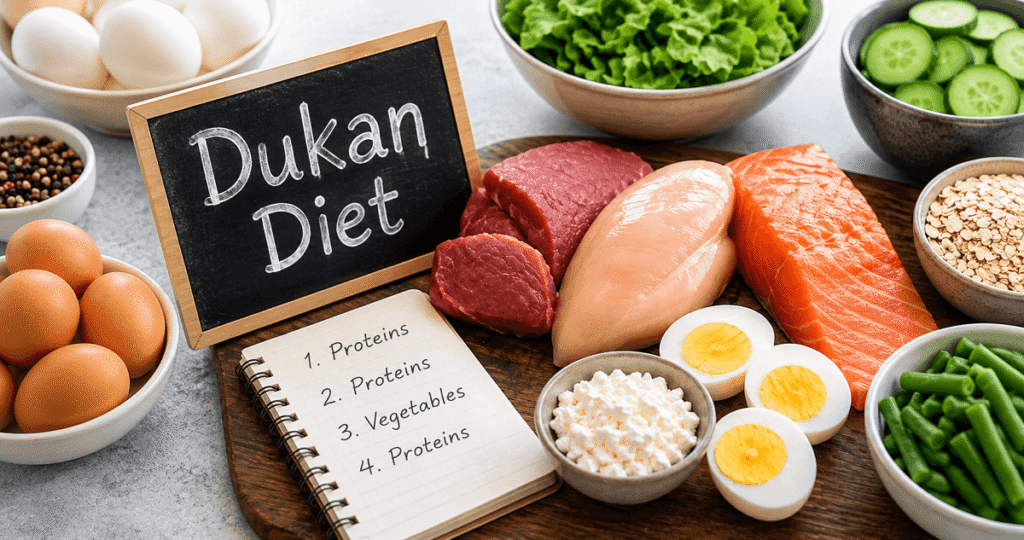
Trying to lose weight can feel frustrating when the scale barely moves despite your effort. The Dukan Diet attracts attention because it gives clear food rules and starts with protein-rich meals that may produce quick changes on the scale. Still, fast weight loss is not always the same as healthy fat loss. Current medical guidance warns that this restrictive plan can make it harder to get enough fiber and other nutrients.
What Is the Dukan Diet and Why Does It Focus So Much on Protein?
The Dukan Diet is a structured, high-protein, low-carbohydrate eating plan created by French doctor Pierre Dukan. It uses four stages called Attack, Cruise, Consolidation and Stabilization. The first stages focus strongly on lean protein, while vegetables and other foods are added as the plan progresses. The official diet materials describe the Attack phase as lasting about 2 to 7 days, followed by a longer Cruise phase.
How Does the Dukan Diet Work Without Traditional Calorie Counting?
The basic idea is simple: eat protein-rich foods, reduce many carbohydrate-rich foods, and follow strict rules for each phase. Protein can help you feel full, so some people may naturally eat less. The diet also removes many foods during the early stages, which can reduce overall calorie intake. Cleveland Clinic notes that the plan is highly restrictive, especially at the beginning.
What Are the 4 Phases of the Dukan Diet and What Changes in Each One?
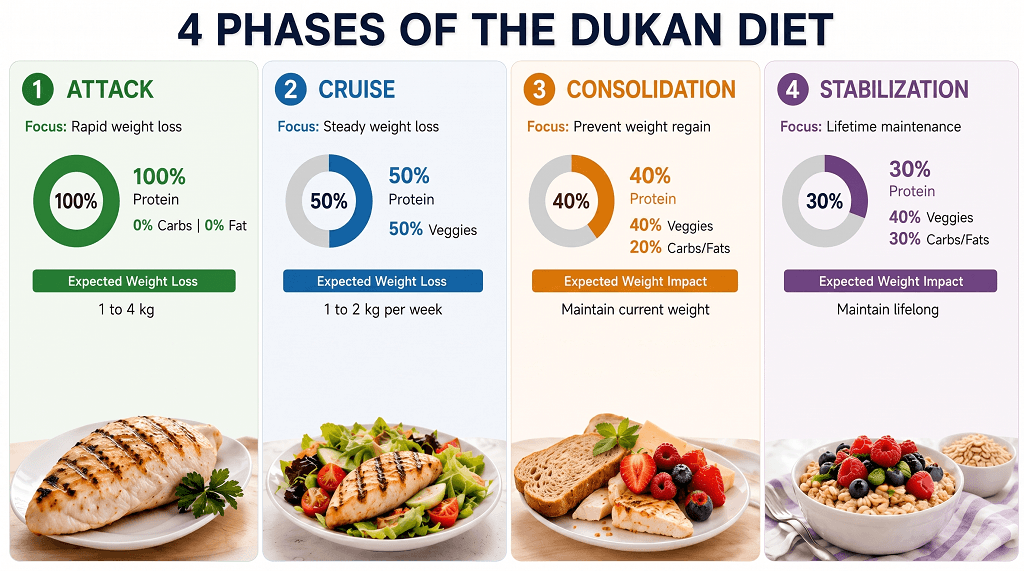
The Dukan Diet is built around four stages. Attack is the short starting stage, Cruise adds selected vegetables, Consolidation brings back more foods, and Stabilization is intended as the long-term maintenance stage. The official plan uses different food rules and oat bran amounts across these stages.
- Attack: Lean protein is the main food group.
- Cruise: Selected vegetables are added.
- Consolidation: Fruit, bread, cheese and starches return in controlled amounts.
- Stabilization: Long-term habits become the focus.
1. Attack Phase: What Can You Eat for 1 to 7 Days?
The Attack phase is designed as a short starting period. The official Dukan materials describe it as lasting 2 to 7 days, with lean protein foods forming the main part of meals and oat bran included daily. Typical foods include lean meat, poultry, fish, eggs and low-fat dairy.
During this stage, meals may look very different from a normal diet because rice, roti, dal, fruit and many vegetables are restricted. That can make the phase difficult for families who eat shared meals. A simple approach is to prepare plain protein separately and avoid adding high-fat sauces or sugary ingredients.
2. Cruise Phase: How Long Does It Last and What Foods Are Added?
The Cruise phase is the longer weight-loss stage. Selected non-starchy vegetables are introduced while protein remains central. The official plan describes alternating pure protein days with protein and vegetable days, continuing until the person’s target weight is reached.
For an Indian meal pattern, vegetables such as cucumber, spinach, cauliflower and zucchini can make meals feel less repetitive. However, traditional foods such as rice, regular roti, potatoes and many grain-based dishes remain restricted during this stage. That makes meal planning important if you’re eating at home, at work or while travelling.
3. Consolidation Phase: How Do You Maintain Weight Loss After Losing It?
Consolidation is meant to reduce the chance of quickly regaining lost weight. More foods are gradually brought back, including selected fruit, cheese, bread and starches. The official plan also includes controlled celebration meals and follows a duration based on the amount of weight lost.
This phase matters because losing weight is only part of the job. If your old eating habits return immediately, the scale can move back up. A better long-term goal is to learn which foods, portions and routines you can actually maintain instead of treating the diet like a short challenge.
3. Stabilization Phase: What Happens Long Term on the Dukan Diet?
The Stabilization phase is intended to continue for life. The official Dukan plan highlights three main habits: eat oat bran daily, stay physically active and keep one regular pure-protein day each week.
The challenge is that long-term restriction can be hard to fit into normal family life. Birthdays, festivals, weddings and restaurant meals are common parts of life. A sustainable weight plan needs to work around real situations, not only perfect days at home.
How Do I Start the Dukan Diet Safely?
Starting any strict weight-loss diet should begin with a health check, especially if you have a medical condition or take regular medicines. The high-protein nature of the Dukan Diet deserves extra attention if you have kidney problems. Cleveland Clinic specifically warns that the plan may be unsuitable for people with kidney disease, diabetes or hypertension.
Before starting, consider:
- Your current weight and health history.
- Your normal protein intake.
- Whether you can manage the food restrictions.
- Your water and fiber intake.
- Whether a doctor or registered dietitian should guide you.
A quick diet should never come before basic safety.
Dukan Diet Food List: What to Eat and What to Avoid
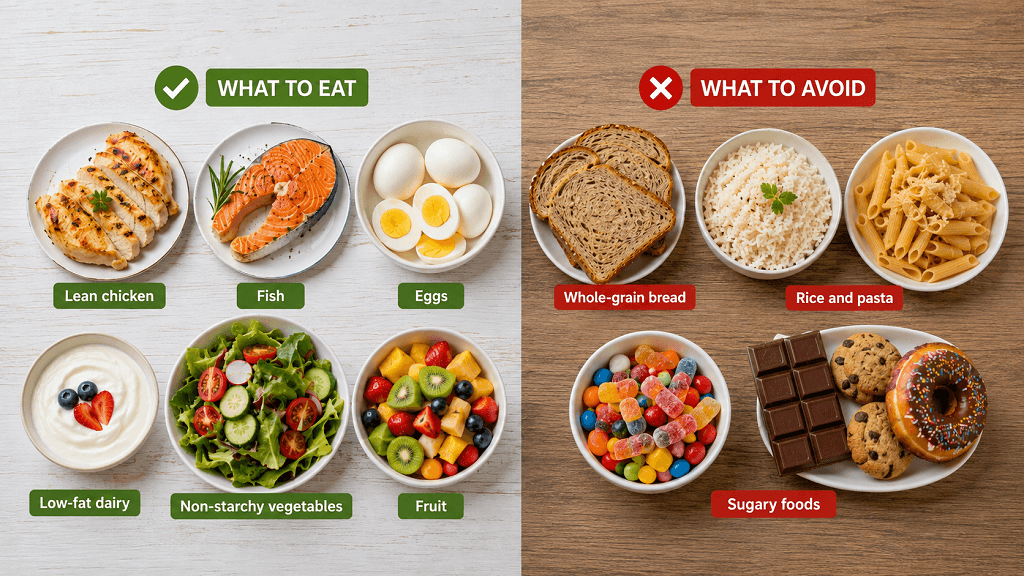
The food list changes as you move through the phases. Lean protein is the foundation, selected vegetables are added later, and foods such as fruit, bread and starches return during Consolidation. The early stages are much more restrictive than a balanced everyday eating pattern.
| Food group | Early Dukan approach | Later phases |
| Lean chicken | Allowed | Allowed |
| Fish | Allowed | Allowed |
| Eggs | Allowed | Allowed |
| Low-fat dairy | Allowed | Allowed |
| Non-starchy vegetables | Limited initially | Added in Cruise |
| Fruit | Restricted | Added in Consolidation |
| Whole-grain bread | Restricted | Added in Consolidation |
| Rice and pasta | Restricted | Controlled later |
| Sugary foods | Avoid | Limited |
1. High-Protein Foods
- Protein is the main part of the Dukan Diet.
- Common choices include chicken, turkey, lean beef, fish, seafood, eggs and low-fat dairy.
- Indian-friendly options include grilled chicken, boiled eggs, steamed fish and low-fat curd.
- Use herbs and spices for flavor instead of adding too much oil.
- Protein portions should match your individual needs. More protein is not always better.
2. Vegetables Allowed on the Dukan Diet
- Vegetables become more important during the Cruise phase.
- The Dukan plan includes 32 vegetables that can be added to meals.
- Non-starchy vegetables are generally preferred, while foods such as potatoes are restricted.
- Good options include spinach, cucumber, cauliflower, mushrooms, tomatoes and zucchini.
- Vegetables add fiber, volume and variety to protein-based meals.
3. Oat Bran and Other Allowed Foods
- Oat bran is an important part of the Dukan Diet from the early phases through Stabilization.
- The recommended amount increases as you move through the phases.
- In the Stabilization phase, the official plan recommends 3 tablespoons per day.
- Oat bran provides fiber and may help you feel fuller and support regular bowel movements.
- However, oat bran does not make the overall diet nutritionally complete. The full food pattern still matters.
Which Foods Should You Strictly Avoid During the Early Dukan Phases?
The early stages restrict many familiar foods. Bread, pasta, rice, potatoes, sugary foods, desserts and many fruits are among the foods commonly limited or avoided.
That can be challenging because rice and wheat-based foods are part of many everyday meals. You may also find restaurant meals difficult because sauces, marinades and cooking oils can contain ingredients outside the plan. Reading labels and asking how food is prepared can help, but the strict rules may still make social eating uncomfortable.
What Does a 7-Day Dukan Diet Meal Plan Look Like?
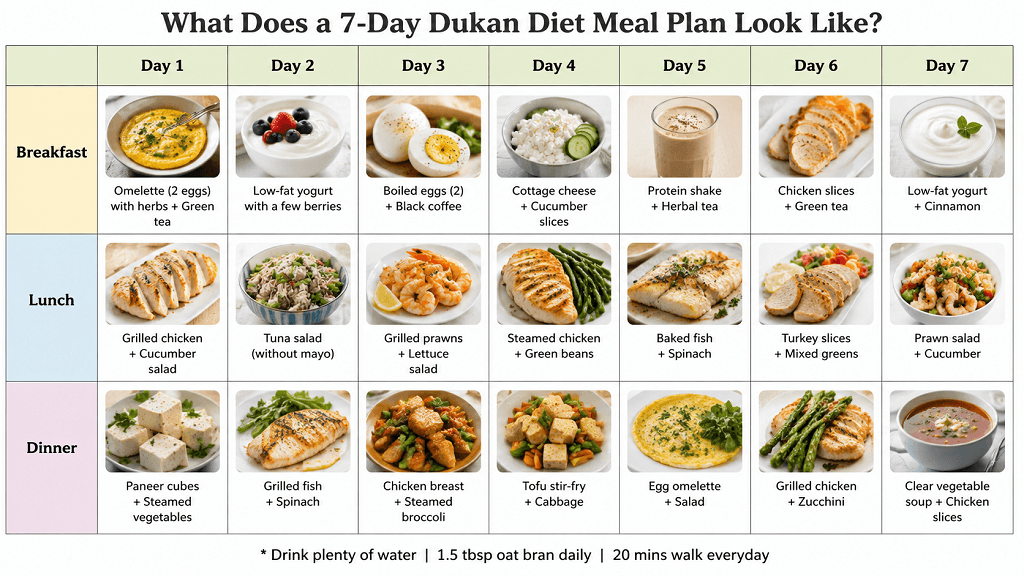
A 7-day plan should be viewed as a sample structure, not a medical prescription. The exact foods depend on the phase you are following. A person in Attack should not copy a Cruise or Consolidation menu simply because it looks more varied. The plan also should not be used to justify extreme calorie restriction.
| Day | Breakfast | Lunch | Dinner |
| Day 1 | Eggs and low-fat curd | Grilled chicken | Steamed fish |
| Day 2 | Low-fat yogurt and oat bran | Chicken with herbs | Egg omelet |
| Day 3 | Eggs and low-fat dairy | Grilled fish | Skinless chicken |
| Day 4 | Oat bran with low-fat yogurt | Chicken and allowed vegetables | Fish |
| Day 5 | Eggs and curd | Lean protein with vegetables | Grilled chicken |
| Day 6 | Low-fat yogurt and oat bran | Fish with vegetables | Egg-based meal |
| Day 7 | Eggs and low-fat dairy | Lean chicken | Fish and allowed vegetables |
What Weight Loss Results Can You Expect From the Dukan Diet?
The scale can change quickly during a low-carbohydrate, restrictive diet, but the first change is not necessarily all body fat. Reducing carbohydrates can lower stored glycogen and the water associated with it, which can make early weight loss look dramatic. The Dukan program itself promotes rapid initial results, while medical sources caution against assuming that quick scale changes equal lasting fat loss.
Your result will depend on your starting weight, food intake, activity, sleep and many other factors. Two people can follow the same menu and see very different results. That is why a fixed promise such as “lose X kilos in seven days” should be treated with caution.
Does the Dukan Diet Really Help You Lose Weight?
It can lead to short-term weight loss because it restricts many foods and emphasizes protein, which may improve fullness. But there is limited high-quality evidence showing that the Dukan Diet itself is a superior long-term weight-loss method. Health reviews describe short-term benefits while raising concerns about its restrictive nature and sustainability.
A diet does not win simply because it produces a fast first-week result. The better question is whether you can follow it for months and years while getting enough nutrients. For many people, a balanced plan with vegetables, fruit, whole grains, healthy fats and appropriate protein may be easier to maintain.
How Much Weight Can You Lose in a Week on the Dukan Diet?
- There is no fixed amount: Weight loss can vary from person to person, so there is no safe number that everyone should expect to lose in one week.
- Early weight loss may be faster: The Dukan Diet is known for promoting quick weight loss in its early phase. However, the amount can differ based on factors such as starting weight, diet, activity level, and individual metabolism.
- Some loss may be water: A sharp drop on the scale during the first week may partly come from water loss, especially when carbohydrate intake is reduced. It does not mean that all the weight lost is body fat.
- Focus on the longer trend: Instead of judging your progress after only seven days, look at your weight trend over several weeks. Waist measurements and how your clothes fit can also give useful clues.
- Avoid extreme targets: Trying to lose a large amount of weight in a very short time can lead to overly restrictive eating and may not be healthy or sustainable.
- Build healthy habits: A balanced diet, regular physical activity, enough fluids, and sustainable eating habits are more useful goals than chasing rapid changes on the scale.
Can You Lose Weight in 4 Weeks With the Dukan Diet?
Four weeks may be enough to see a noticeable change for some people, but the amount varies greatly. A person’s starting weight, calorie intake, activity level and ability to follow the plan all affect the result. The Dukan program is designed to move from the early phases into longer-term stages rather than treating four weeks as the entire journey.
It is better to set a realistic process goal than chase a dramatic number. For example, following your planned meals, walking regularly and improving sleep can give you habits that remain useful after the diet ends. Weight loss is easier to maintain when the routine does not feel like punishment.
What Are the Main Benefits of the Dukan Diet?
The biggest practical benefit is structure. If you are confused by what to eat, having a clear list can make decisions easier. Protein-heavy meals may also help some people feel full, and the plan gradually brings foods back instead of keeping every food restricted forever.
Other potential advantages include:
- Simple phase-based rules.
- Less dependence on calorie counting.
- Strong focus on protein.
- Gradual food reintroduction.
- A dedicated maintenance phase.
- Encouragement to stay physically active.
These benefits need to be weighed against the diet’s restrictions and nutritional gaps.
What Are the Risks and Side Effects of the Dukan Diet?
The Dukan Diet has important downsides. A strict protein-heavy pattern can make it harder to get enough fiber and a broad range of vitamins and minerals. Current medical reviews mention possible constipation, fatigue, headache, bad breath and nutrient imbalance, while Cleveland Clinic warns about the restrictive nature of the plan.
There are also concerns around kidney health for people with existing kidney disease. A 2026 systematic review of randomized trials found that high-protein diets changed measures such as eGFR but did not show consistent biochemical evidence of kidney injury in adults without chronic kidney disease, while also noting uncertainty about long-term effects.
Can Vegetarians Follow the Dukan Diet Without Losing Variety?
Yes, vegetarians can follow a modified version of the Dukan Diet, but it may be harder to maintain variety. The traditional plan depends heavily on animal-based protein.
Vegetarian-friendly protein options may include:
- Tofu
- Eggs
- Low-fat dairy products
- Other permitted plant-based protein sources
Things vegetarians should consider:
- Protein: Make sure you still get enough protein from suitable vegetarian foods.
- Iron: A meat-free diet needs careful planning to provide enough iron.
- Vitamin B12: This is especially important for people who eat little or no animal food.
- Calcium: Dairy-free vegetarians should pay attention to other calcium sources.
- Overall calories: Very restrictive food choices can make it harder to get enough energy.
If you eat eggs and dairy, following a vegetarian version may be easier. For a vegan diet, the choices can be much more limited, so guidance from a qualified nutrition professional can help you create a safer and more balanced plan.
What If You Have Food Allergies or Other Dietary Restrictions?
Food allergies can make a restrictive diet even harder. If eggs, dairy, soy, fish or another common protein source is off your menu, you may have fewer foods available during the early phases. Never eat an allergen just because it appears on an approved diet list.
A safer approach is to identify your allergies first and then build meals around foods you know are safe. People with diabetes, kidney disease, high blood pressure, pregnancy, eating disorders or other medical concerns should speak with a healthcare professional before starting a strict diet. Current medical guidance specifically flags several of these groups for caution.
Can the Dukan Diet Be Made More Flexible?
Flexibility is one of the biggest challenges. Traditional meals often combine grains, lentils, vegetables, dairy and spices in one dish. A strict Dukan phase can therefore clash with family cooking, office lunches and social events.
If you’re considering the approach, don’t quietly change major rules and assume you’re still following the original program. Instead, discuss a safer personalized version with a dietitian. A flexible, balanced eating pattern may fit food habits better and be easier to continue after the first few weeks.
How Much Should You Exercise During the Dukan Diet?
The official Dukan plan includes daily walking and encourages regular physical activity. Its materials describe 20 minutes of walking during Attack, 30 minutes during Cruise and 25 minutes during Consolidation.
You don’t need to turn every workout into a punishment. Walking, cycling, swimming, strength training and other activities can support health and weight management. If your food intake is very restricted, however, suddenly adding hard workouts may leave you tired or dizzy. Increase activity sensibly and listen to your body.
How Can You Maintain Weight Loss After the Dukan Diet?
Keeping the weight off can be harder than losing it. The Dukan Diet uses the Consolidation and Stabilization phases to help make weight management easier after the stricter phases.
Key parts of the plan include:
- Weekly protein-focused day: The plan recommends one day centered on protein-rich foods.
- Daily oat bran: Oat bran remains part of the long-term routine.
- Regular physical activity: Keep walking or doing other activities you enjoy.
- Watch portion sizes: Eating reasonable portions can help prevent gradual weight gain.
- Get enough sleep: Good sleep can support healthy eating habits and daily energy.
- Enjoy treats sensibly: You do not have to avoid every favorite food forever.
- Choose balanced meals: Include a wider range of nutritious foods as your diet becomes less restrictive.
Dukan Diet Review: Does It Really Work for Real People?
The honest review is mixed. The plan can be effective for short-term weight loss because it creates strict food boundaries and emphasizes filling protein foods. However, medical reviews say there is limited long-term evidence for the Dukan Diet, and its restrictions can make it difficult to maintain.
The strongest part of the plan is its structure. The weakest part is its rigidity. A good weight-loss plan should help you eat well not only when everything goes perfectly, but also when you’re travelling, attending a family function or sitting down for a normal Sunday lunch.
What Should You Consider Before Trying the Dukan Diet?
Ask yourself whether you can follow the rules without feeling constantly hungry, tired or socially isolated. Think about your medical history too. A high-protein diet is not something to start casually if you have kidney disease or another condition that affects your nutrition needs.
Before starting, consider these points:
- Can you follow the food restrictions?
- Will you get enough fiber?
- Can you maintain the plan after losing weight?
- Does it fit your family meals?
- Are you taking medicines that may affect your diet?
- Do you have a medical condition requiring dietary care?
A healthcare professional can help you answer these questions.
Dukan Diet Tips and Advice for a Simpler, Safer Routine
If you decide to explore the Dukan Diet, planning will make the experience easier. Keep simple protein foods available, drink enough water, prepare meals before busy days and track how you feel rather than watching only the scale. Don’t extend a restrictive phase simply because you want faster results.
For a healthier approach, focus on quality as well as quantity. Choose lean protein, vegetables, fiber-rich foods and minimally processed meals whenever your phase allows them. If constipation, severe weakness, dizziness, persistent headaches or other worrying symptoms appear, stop and seek medical advice instead of pushing through.
Dukan Diet vs a Balanced Weight-Loss Plan: Which Is Better for You?
A strict diet can feel attractive because it removes guesswork. A balanced plan can feel harder at first because it gives you more choices. Yet more choice can also make a plan easier to live with. The key difference is sustainability, because weight management is not finished when the scale reaches a target.
| Factor | Dukan Diet | Balanced weight-loss approach |
| Food variety | Low at first | Usually broader |
| Protein | Very high focus | Moderate, personalized |
| Carbohydrates | Strongly restricted early | Usually included |
| Fruits | Restricted early | Usually included |
| Vegetables | Added later | Usually included from the start |
| Calorie counting | Not central | May or may not be used |
| Long-term flexibility | Can be difficult | Usually more flexible |
| Medical supervision | Useful for higher-risk people | Useful when needed |
Why Should You Think About Sustainability Before Starting the Dukan Diet?
The most important question is not “How quickly can I lose weight?” It is “Can I still eat this way six months from now?” Short-term motivation can carry you through a strict first week, but long-term results depend on habits that fit your real life.
A 2026 medical review describes the Dukan Diet as potentially effective for short-term weight loss but points to limited long-term evidence and concerns about its restrictive design. That is a useful reminder to judge any diet by safety, nutrition and sustainability, not just speed.
How Can You Use a Dukan Diet Meal Plan Without Making Food Complicated?
Meal preparation does not have to become a full-time job. Choose two or three protein sources for the week, prepare basic portions ahead of time and add approved vegetables when your phase allows them. Keep seasonings simple and check sauces because hidden sugar and fat can quickly change a meal.
For households, meal prep can mean boiling eggs, preparing grilled chicken, cooking fish without heavy sauces and keeping low-fat dairy ready. You can also plan separate family sides rather than making everyone follow the same diet. This keeps family meals more comfortable while allowing individual dietary needs.
Is the Dukan Diet Healthy for Everyone?
No. A diet that works for one person may be unsuitable for another. The Dukan Diet’s high-protein and restrictive nature deserves particular caution for people with kidney disease, diabetes, hypertension, pregnancy and certain other health conditions.
Even healthy adults should consider whether they can meet their nutritional needs while following the plan. A diet can produce weight loss and still have weaknesses. That’s why health should be measured by more than the number on the scale.
Conclusion
The Dukan Diet offers a very clear path through four phases, with protein at the center and foods added gradually. It may help some people lose weight in the short term, especially because its strict rules can reduce overall food and calorie intake. However, current medical sources highlight its restrictive nature, possible nutrient gaps and questions about long-term sustainability.
If you’re thinking about starting it, don’t chase the fastest possible result. First consider your health, normal eating habits, activity level and ability to maintain the plan. A doctor or registered dietitian can help you decide whether this approach is appropriate or whether a more balanced weight-loss plan would be a better fit.
FAQs
How much weight can you lose on the Dukan Diet?
There is no single amount that everyone will lose. The official program promotes rapid early weight changes, but medical sources explain that early low-carbohydrate weight loss can include water as well as body fat. Your starting weight, food intake, activity and health all affect the result.
Can you drink coffee on the Dukan Diet?
Coffee is commonly included in versions of the Dukan Diet, especially when it is consumed without added sugar and high-fat ingredients. However, the exact rules can vary by phase and version of the plan. Water should remain an important source of hydration.
Is the Dukan Diet safe?
It is not suitable for everyone. Medical sources warn that its restrictive, high-protein design can create nutritional concerns and may be inappropriate for people with conditions such as kidney disease, diabetes or hypertension. Talk to a healthcare professional before starting if you have a medical condition or take regular medicines.
What happens if you cheat on the Dukan Diet?
One meal outside the plan does not mean you have failed. Return to your normal meal structure rather than starving yourself or exercising excessively to compensate. If breaking the rules happens often, consider whether the diet is too restrictive and whether a more flexible approach would be easier to maintain.
Is the Dukan Diet healthy?
The diet can provide protein-rich foods and may support short-term weight loss, but it is highly restrictive. Limiting fruit, whole grains and other foods for long periods can make a balanced nutrient intake harder. Current medical reviews recommend caution and question its long-term sustainability.
How fast is weight loss on the Dukan Diet?
Weight loss can appear fast during the early stages. Part of an early drop may come from changes in water and glycogen when carbohydrate intake falls, rather than pure body-fat loss. The rate after the first stage varies from person to person.
Is there a 7-day Dukan Diet plan?
Yes. A seven-day plan can be created around the phase you are following. The first stage is much more restrictive than later stages, so a meal plan should match your exact phase. A sample plan should not be treated as a medical prescription.
How much maximum weight can you lose in 7 days?
There is no medically reliable maximum weight-loss number that applies to everyone. Claims of dramatic seven-day losses should be viewed carefully because early changes can include water loss. Trying to force a very large loss through severe food restriction can create unnecessary health risks.
How much weight can you lose on the Dukan Diet in a week?
The amount varies based on starting weight, calorie intake, activity and other factors. The official program has historically promoted rapid early results, but that does not mean every person will lose the same amount. Focus on steady progress instead of a fixed weekly target.
Can the Dukan Diet help me lose weight quickly?
It can produce quick scale changes for some people because it strongly restricts carbohydrates and many calorie-dense foods while emphasizing protein. Still, fast weight loss does not automatically mean lasting fat loss. Medical reviews describe short-term weight loss but raise concerns about long-term evidence and sustainability.
Is the Dukan Diet safe for everyone?
No. People with kidney disease, diabetes, hypertension and certain other health conditions may need to avoid or modify a high-protein restrictive diet. Pregnant people and anyone with a history of eating disorders should also seek professional advice before making major dietary changes.
Customer Reviews
No reviews yet. Be the first to leave one.